A Vote for Dignity

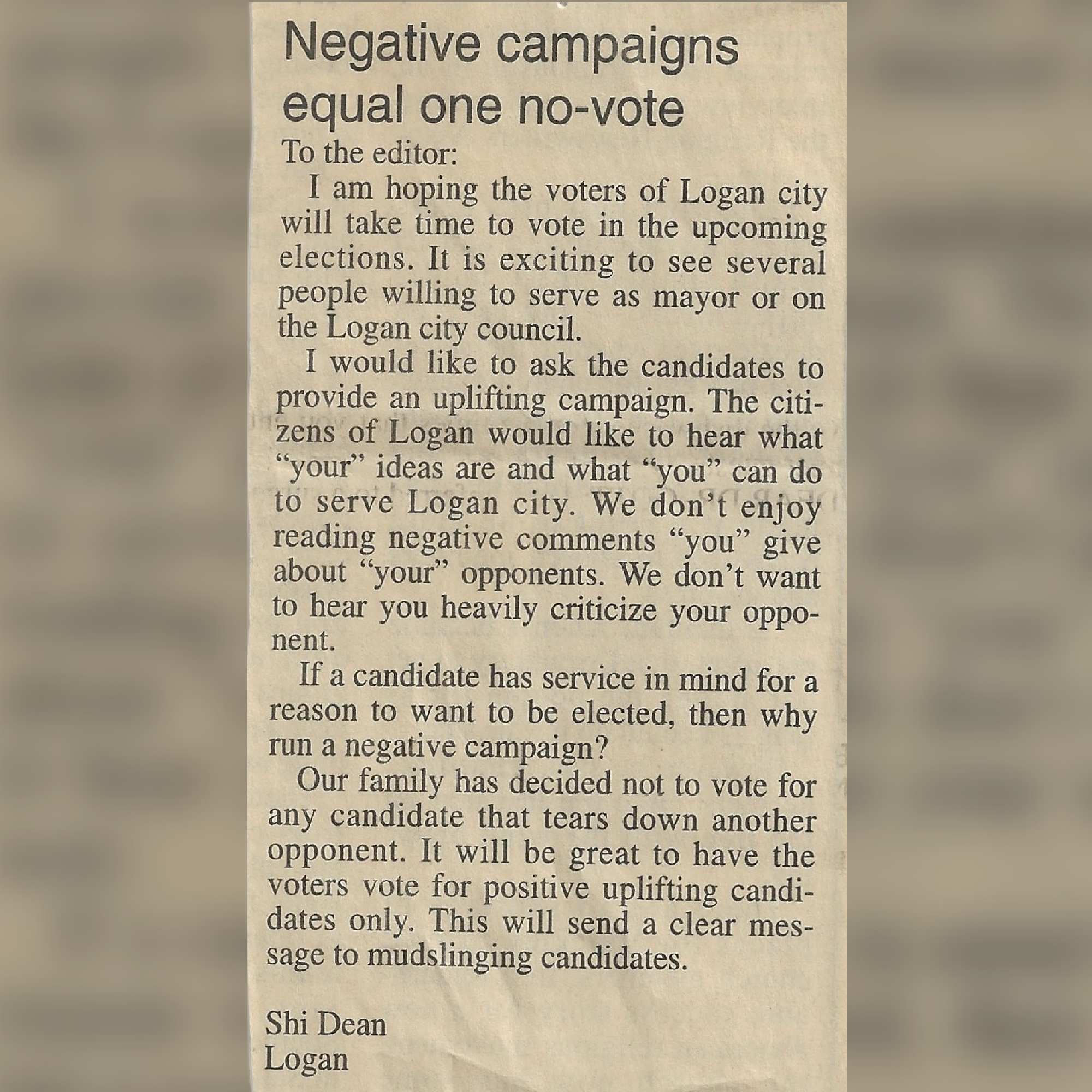
I’ve been spending time recently poring over old photos and scrapbook items in an attempt to organize decades of memories. As I read through a stack of newspaper clippings from my time in local public service, this letter to the editor caught my eye. Written nearly 30 years ago, during my first city council campaign, its message is still strikingly relevant today:

The author, Shi Dean, was a well-known and well-respected businesswoman and realtor in my community, and the fact that I clipped and saved her letter demonstrates the impression this left on me as a first-time city council candidate. Her message was clear: If you want to win my vote, contempt won’t work.

Millions of Americans share this same opinion today. At a time when political rhetoric has become increasingly negative and filled with contempt, people are saying enough! As reported in our inaugural Dignity Barometer released in March, 78% of Americans are dissatisfied with the way we treat each other, 77% believe it’s getting worse, and 83% hold “elected leaders and people running for office” as primarily responsible for the political divisions in our country.

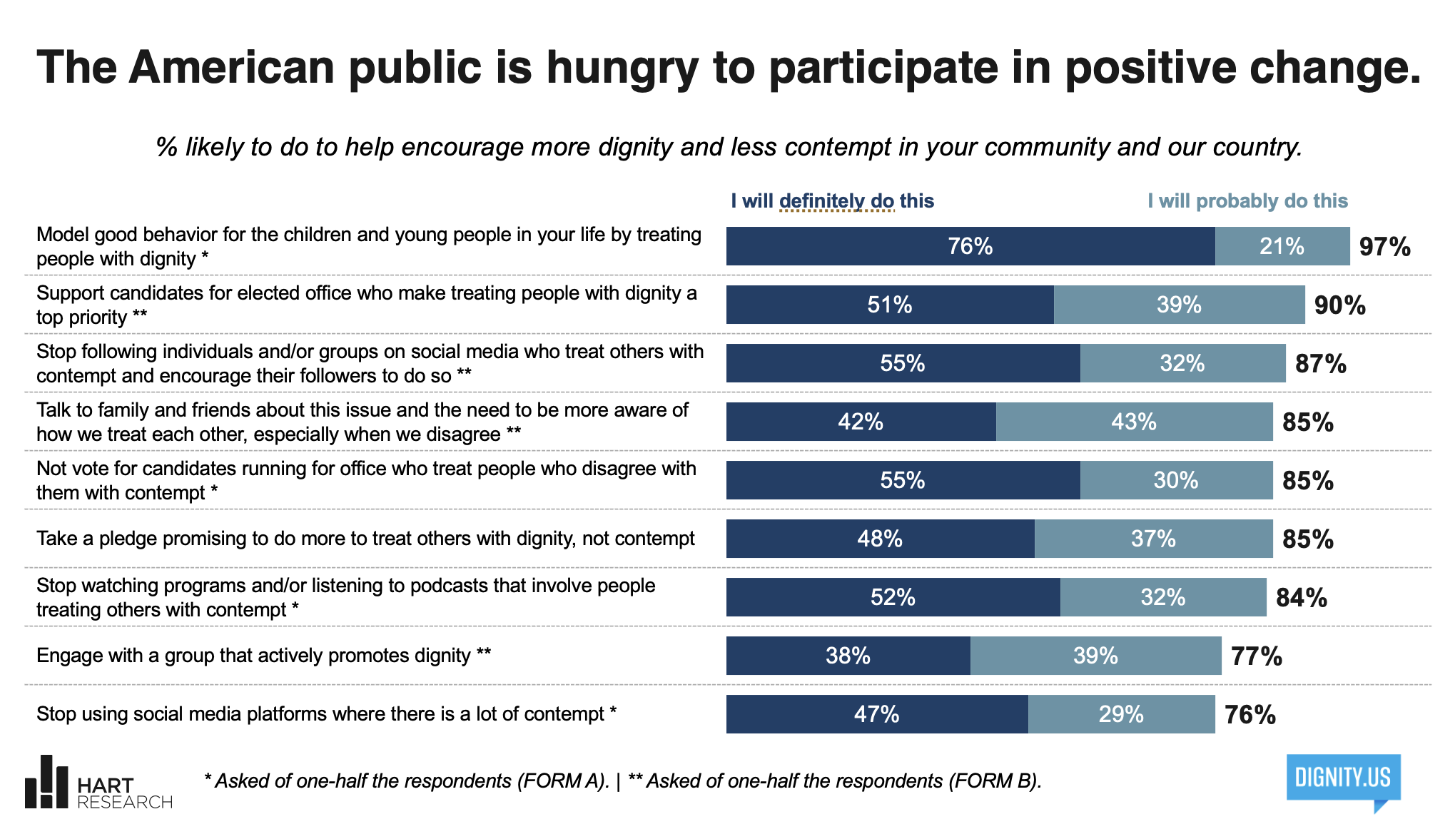
Perhaps more importantly, the Barometer revealed that, like Shi Dean, Americans are ready to reject contempt in politics: 85% are willing to withhold their vote from candidates who use contempt toward those they disagree with, and 90% say they are willing to support candidates who treat their opponents with dignity. Both stunning—and not surprising.

This is the best kind of news for members of the dignity movement, because it points to simple, concrete actions we can all take to encourage more dignity and less contempt in our public and political discourse.

What does taking action look like?

It can be as simple as responding to a fundraising pitch the way this person did upon first learning about the Dignity Index:

"I just texted an organization whose position I support, however I felt that their communication vilified elected officials to raise funds. I recommended that they review the Dignity Index, evaluate their contemptuous marketing and align their messaging with their values and increased dignity."

Or it can mean contacting a candidate seeking your support and ask for their commitment to dignity, like this person did just last month after attending a Dignity Index event:

“[A] Congressional candidate told me one of the [event] attendees met with her, Dignity Index card in hand, and asked if she would commit to staying above a FIVE on the scale.”

It takes a little more courage—at least in my experience— to write a letter to the editor or speak up during a local city council meeting, stating your support for dignity and asking for others to join you. But take heart! Remember that an overwhelming percentage of citizens feel the same way you do. Speak with dignity, and your message will resonate.

And let me be clear: it’s not just voters who are hungry for more dignity in political discourse—thousands of elected officials are working to lead with dignity as well. They want meetings that encourage rather than shut down diverse opinions. They want their interactions to model active listening and robust debate. They want to be effective problem-solvers—and they’re discovering dignity as a practical tool. But they need us: constituents who will support those who lead with dignity.

Last October, the U.S. Conference of Mayors launched a declaration, signed by 230 mayors from 41 states and Puerto Rico, committing to “de-escalate our nation’s political tensions and reject violence and dehumanizing rhetoric. And in March, the National League of Cities—representing 19,000 cities, towns, and villages—passed their own resolution, to “Lead with Dignity, Civility, and Respect.”

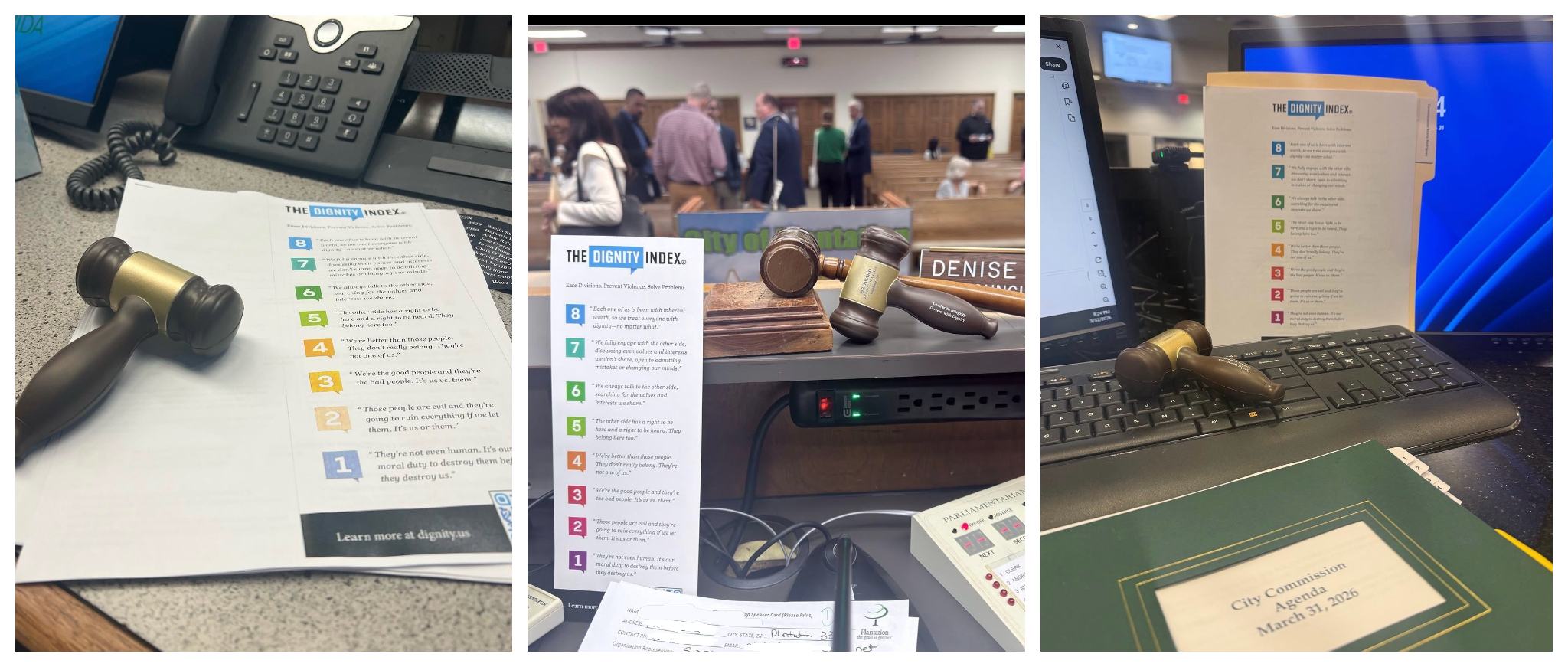
Local officials in several Broward County cities (FL), are using the Dignity Index in their public meetings.

This is a symbiotic relationship: elected officials who want to lead with dignity need citizens willing to vote for dignity over contempt; and citizens who prioritize dignity in political discourse need candidates they can support. 

I want to leave you with the Dignity Barometer finding I found to be the most optimistic of all. When asked who is responsible for the divisions in our country, Americans listed politicians & candidates first, followed by media and social media, and then —“all of us.”

It’s about all of us. We contribute to the divisions, and we have the power to change course.

What will you do today to reward dignity in public life? We’d love to hear about the action you’re ready to take–or already have! Drop us a note at dignityindex@unite.us.

Tami


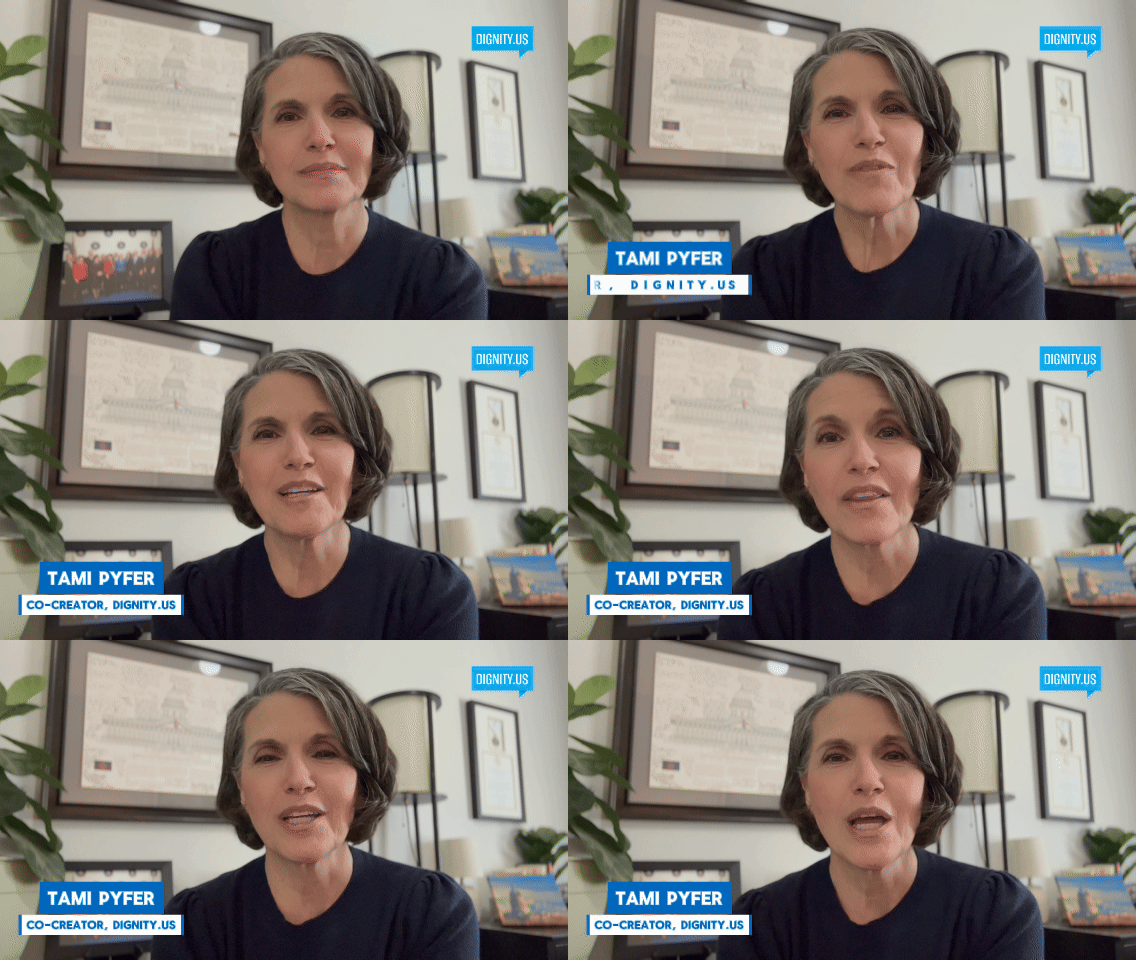
Watch: Elected officials across the country are leaning into this…


Dignity in Action

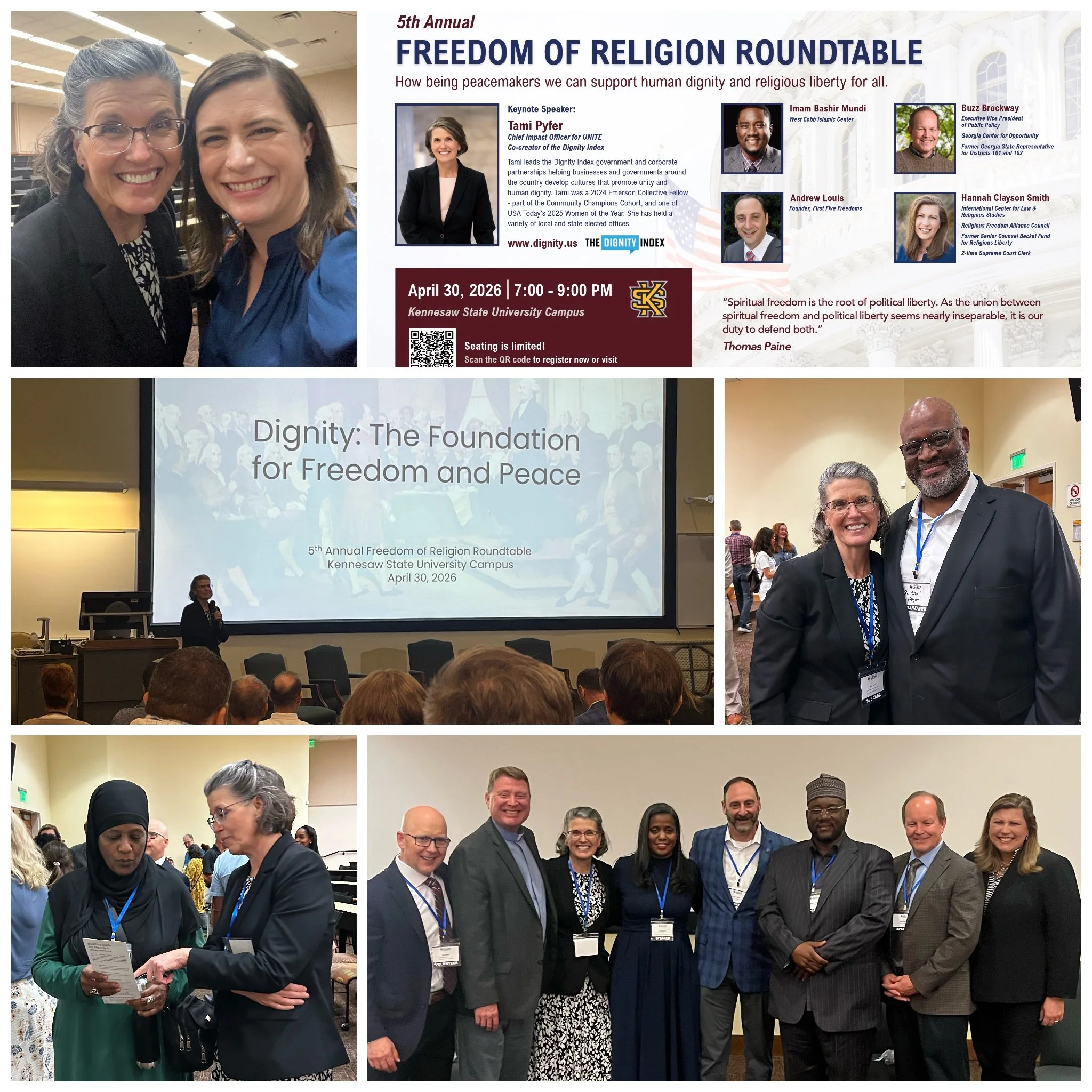
Tami Pyfer was in Atlanta at the 5th Annual Freedom of Religion Roundtable at Kennesaw State University. Her presentation focused on the connection between human dignity, religious freedom, and our shared heritage of protecting both.

She highlighted the role dignity plays in peacemaking, especially in spaces shaped by different beliefs.


The Dignity Community brings people together to share stories, learn from one another, and practice dignity in everyday life. Join us for live chats, free resources, and exclusive community content.


Dignity Community Events

“Love Your Enemies” by Arthur Brooks, book club meeting TONIGHT, May 6th at 7:30 ET.  We’ll be covering the Introduction, Chapter 1: The Culture of Contempt, and Chapter 2: Can You Afford to Be Nice?

ALL ARE WELCOME! We don’t require you to read the book with us, but we do want you to participate. Come for a great conversation!


Next
Next

I Wish