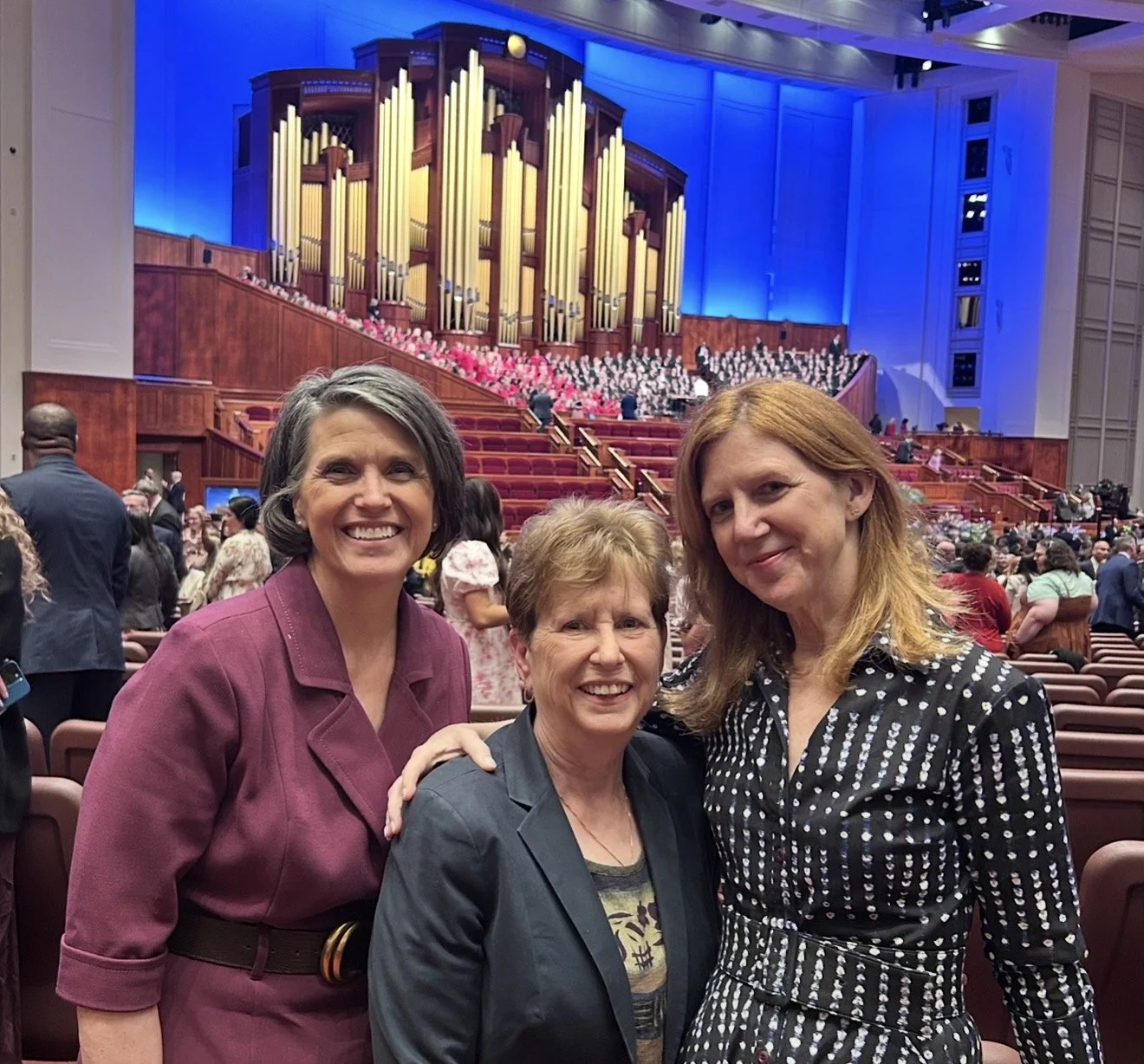
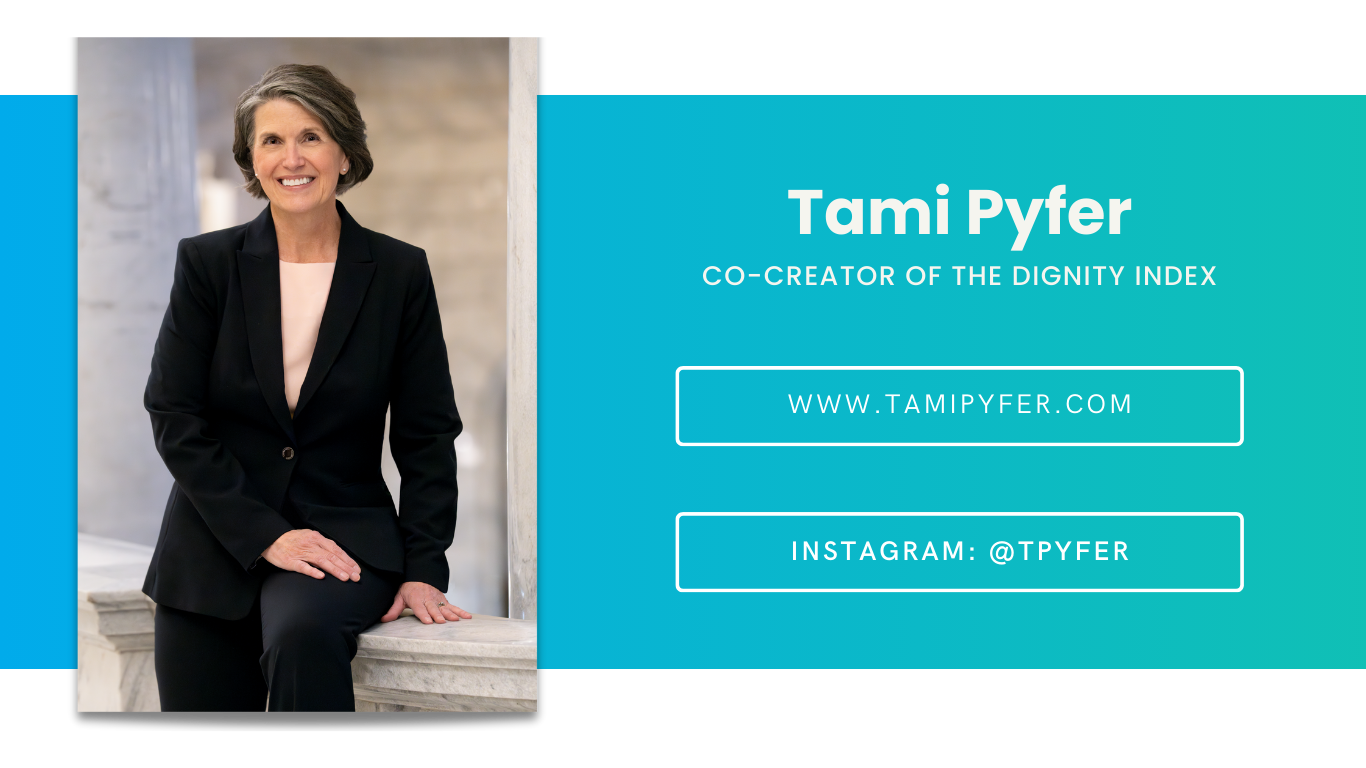
Pictured above- Dignity Team Members: Tami, Gerri, Alicia
Some of my earliest lessons about dignity came from learning how to work through moments of feeling different—like I didn’t belong.
Growing up in rural Montana, my church congregation was small, with few kids my age. So in addition to my own worship services, I often attended church with classmates or joined them at their summer Bible camps. Those experiences helped me feel connected to my friends, though they didn’t always spare me from feeling self-conscious, or different when it came to our religious practices.
One memory from eighth grade still stays with me. During a science lab, my lab partner—a boy I had a crush on—turned to me mid-experiment and asked, “So you’re a Muslim, right?”
“No,” I replied. “I’m a Mormon.”
“Oh, right,” he said. “I knew it was one of those weird religions that started with an ‘M.’”
I was weird. Ouch.
I thought of that experience decades later while I was serving on the city council and began engaging with a group of faith and civic leaders in our community. In the wake of 9/11, these leaders were concerned about the safety and acceptance of Muslim residents in our city, and asked what could be done during this precarious time. Soon, our mayor and other leaders created a “community connections” organization designed to help community members see and welcome all as neighbors who belong. This group began to host interfaith and cultural gatherings that continue to this day.
My favorite of these efforts was Faith Exchange Welcome Weeks. Each November, community members were encouraged to visit a religious service outside their own faith tradition. I looked forward to these visits because I loved interacting with the various faith groups in our community, and also because I wanted my children to have these experiences, much like I did as a youth. Thirty years after that awkward moment in an eighth-grade science lab, I found myself attending a worship service with a Muslim friend during Faith Exchange Welcome Weeks, able to laugh at the memory and grateful for how much I had learned since then.
Over the years, these interfaith visits became a gift to me and to my family. My children experienced different styles of worship and doctrine, and I learned to see people in new ways—experiences that I believe helped me be more open and inclusive in my public service. Most importantly, I came to understand how much our many faith and spiritual traditions have in common, with the belief in the dignity of every human being a core tenet.
That shared commitment of seeing and speaking to one another with dignity was evident last week in a message from Pope Leo XIV, who, ahead of Lent, invited Catholics to practice a particular kind of fasting:
I would like to invite you to a very practical and frequently unappreciated form of abstinence: that of refraining from words that offend and hurt our neighbor. Let us begin by disarming our language, avoiding harsh words and rash judgement, refraining from slander and speaking ill of those who are not present and cannot defend themselves. Instead, let us strive to measure our words and cultivate kindness and respect in our families, among our friends, at work, on social media, in political debates, in the media and in Christian communities. In this way, words of hatred will give way to words of hope and peace.
That same call to “disarm our language” and choose restraint over contempt was taught by my own faith leader, the former president and prophet of the Church of Jesus Christ of Latter-day Saints, Russell M. Nelson, on Palm Sunday in 2023:
Anger never persuades. Hostility builds no one. Contention never leads to inspired solutions… How we treat each other really matters! How we speak to and about others at home, at church, at work, and online really matters. Today, I am asking us to interact with others in a higher, holier way. Please listen carefully. “If there is anything virtuous, lovely, or of good report or praiseworthy” that we can say about another person—whether to his face or behind her back—that should be our standard of communication.
Our dignity team includes members from both of these faith traditions, as well as other religious and non-religious traditions. Increasingly, we are hearing from faith-based communities across the country who are interested in how the Dignity Index can support their efforts. These groups are already engaged in the dignity movement; the Dignity Index simply provides shared language and practical strategies to help move that work forward together. It’s both humbling and deeply encouraging.
Last week, I attended Mass with friends—the first time in almost a year that I’ve worshiped outside my own church. And later this month, I’ll participate in an interfaith Ramadan dinner. I’m grateful for these experiences and realize I need to seek out more of them. Because in moments of worship and communion, I can’t help but see people—friends and strangers alike—through the lens of dignity: as human beings with inherent, even divine, worth. It may not change everything, but it changes me. And that’s a good start.
Tami
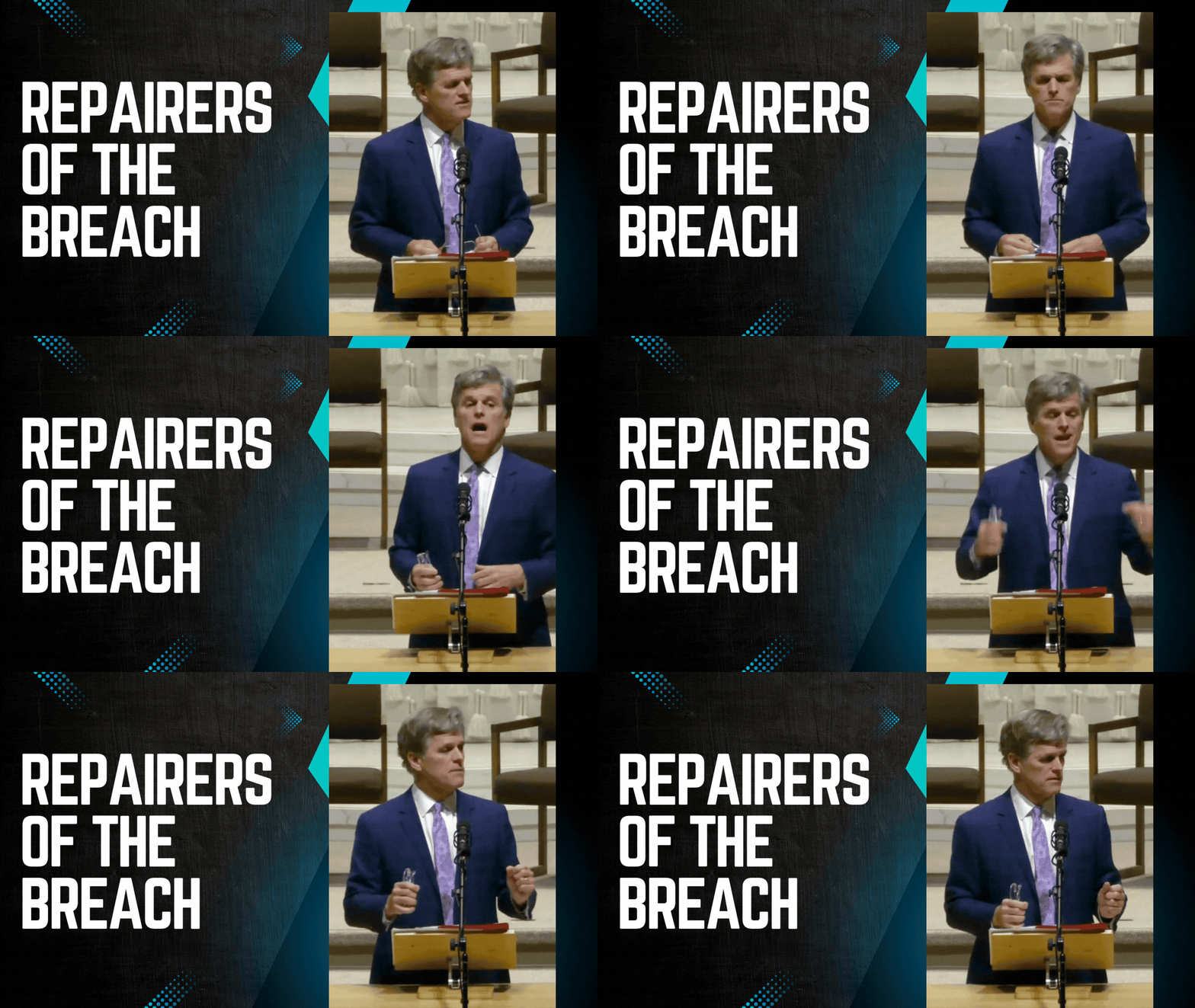
Click HERE to watch: The Problem and the Opportunity Now - Repairers of The Breach with Tim Shriver
Dignity in Action
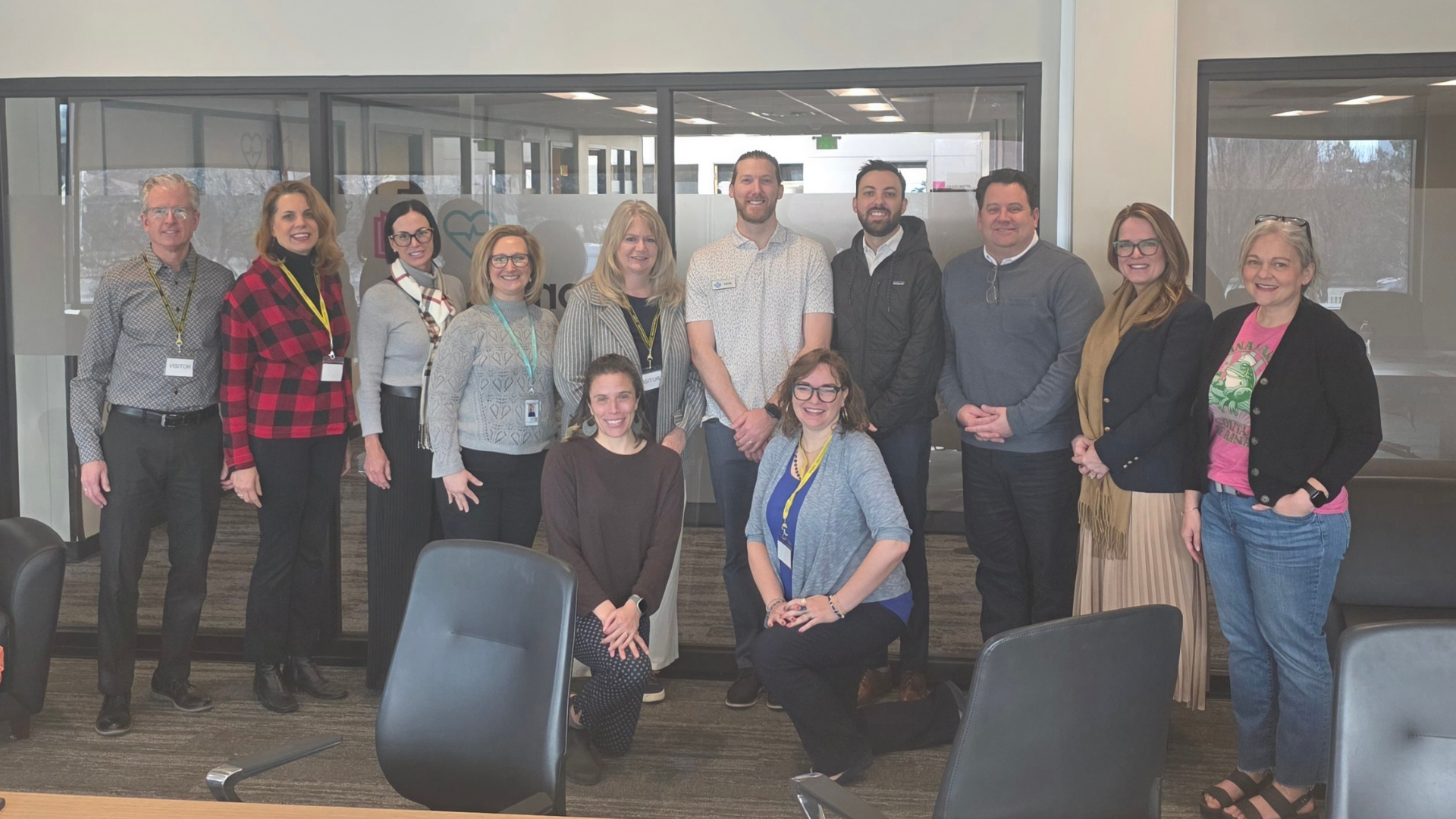
David and Preston recently led a hybrid workshop for nonprofit executive directors in Utah. The energy and discussion in the room made one thing clear - our Community Pillar is expanding, and the need for the Dignity Index is being felt at every level in the community.
The Dignity Community brings people together to share stories, learn from one another, and practice dignity in everyday life. Join us for live chats, free resources, and exclusive community content.