A Formula for Change

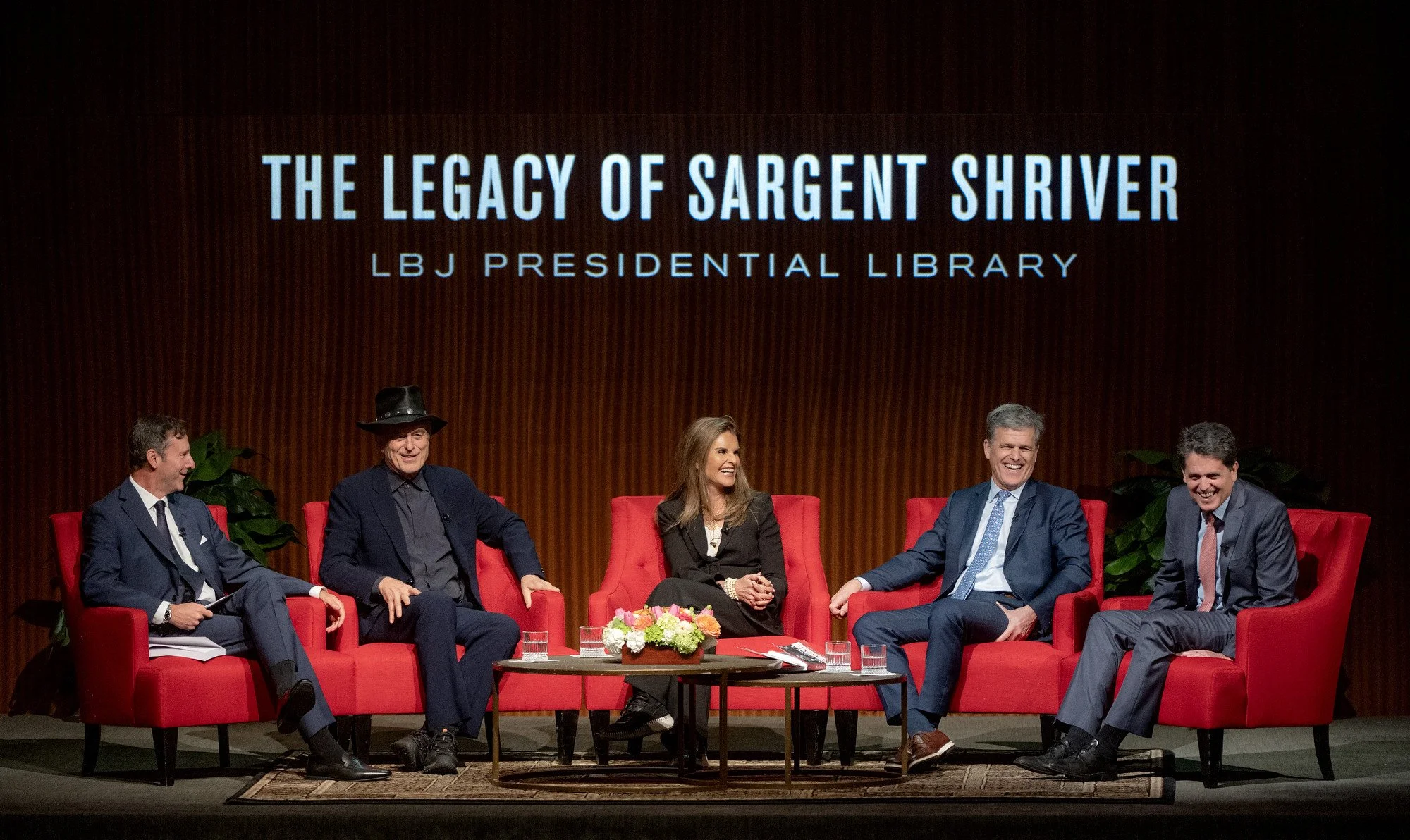
Photo credit: Jay Godwin

In 1960, President-elect John F. Kennedy asked my Dad to create the Peace Corps.

For the following 4 years, my dad met with world leaders to ask them to welcome Peace Corps Volunteers, championed the power of young people to be peacemakers at home, built a broad bipartisan political coalition to support service to our country, and worked tirelessly to fulfill President Kennedy’s vision of a freer world.

But in January of 1964, all that changed. President Lyndon Baines Johnson succeeded President Kennedy after the horror of November 22, 1963, and he had another vision for a freer world: an America free of poverty. In his State of the Union on January 8, 1964, President Johnson announced an “unconditional war on poverty.” Days later, he unexpectedly summoned my dad to the White House and asked him to lead the war. My Dad declined the President’s offer: “I dismissed the idea,” my Dad wrote, “having my hands more than full with the Peace Corps.”

President Johnson was not impressed by his resistance and called our house the following day to speak with Dad. “Mr. President, I am flattered to be considered, but frankly, I have absolutely no desire for the job.” Johnson was undeterred: “I can’t give you a lot of explanations why I need you to do it immediately,” the president said,  “but that’s the way it is. You’ve got to do it today.” Hours later, Dad was not only the Founding Director of the United States Peace Corps but also the director of the Office of Economic Opportunity, whose mission was the elimination of poverty in America.

While this may seem like ancient history, it’s fresh in my mind because my sister Maria and my brothers Mark and Bobby joined together last week at the Johnson Library in Austin, Texas, to release a book our dad wrote in 1969 but never published.

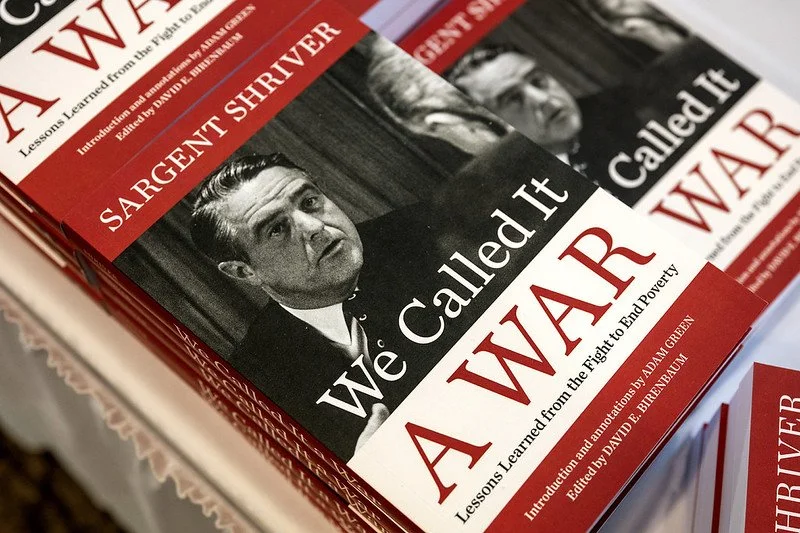
Entitled, “We Called It A War, the book is our Dad’s first-hand account of the strategies, politics, research, program design, and national mobilization that led to the creation of programs like Head Start, The Job Corps, Upward Bound, Legal Services, Community Action, and Neighborhood Health Services.

But what struck me was the way the country responded. Republican and Democratic leaders passed legislation. Legal activists like Edgar and Jean Cahn designed new ways of empowering the poor. Faith leaders like Rev. Billy Graham and Rev. Dr. Martin Luther King, Jr., championed the urgency of opportunity. And thousands of others joined in what the historian Adam Green compared to a faith-based mission “seeking justice, affirming equity and recognizing the dignity of the poor.”

The country was full of turmoil and change in the 1960’s—political violence, domestic unrest, social change, and polarization were all huge issues. And yet there, in the midst of it all, the country came together for moment in time and rose to the challenge of seeking justice, equity, and dignity for those who needed it most.

But what struck me as I read the book and joined a discussion at the Johnson Library was that a huge array of American leaders responded to the call of dignity and created a formula for achieving it. They emphasized values, in particular, the dignity of every human being. They were pragmatic and emphasized doing what could be done. They were creative and emphasized invention and innovation, and listening to those who had long been ignored or overlooked. They called everyone in and almost never called anyone out. They had faith in God and in each other.

Today, our dignity movement does not rely on government leadership but instead invites each of us to become activists and exemplars in the work of recognizing dignity. Dignity, pragmatism, creativity, faith—all these are still possible for us today—in fact, they’re pretty much our formula today! Our goal is not to mute differences but to find practical and creative ways to transcend them. Our vision is of cultures of dignity where free speech is prized, voices welcomed, and problems solved.

Like the innovators of the 1960’s, our schools team and our politics team, our faith team, and our business team are all listening to the hunger in our country for an end to dehumanization and an opening to treating others with dignity. We’re trying to create that same special combination of healers, creatives, activists, and problem solvers to take on the contempt industrial complex that threatens not just our institutions, but our families, our communities, and ourselves, too.

Last week, we released the first-ever Dignity Barometer. The headlines from the data were clear: there’s a “dignity gap” in our country:  we want dignity, but we’re not practicing it. There’s a dignity urgency in our country: it’s almost as urgent as affordability and economic uncertainty. And perhaps most chilling, there’s a threat to our future:  we are worried about our children. They’re watching, and we don’t like what they’re seeing.

In the 1960’s, collective action, political will, creativity, faith, and values worked. “In the decade following the 1964 introduction of the War on Poverty, poverty rates in the U.S. dropped to their lowest level since comprehensive records began in 1958: from 17.3% in the year the Economic Opportunity Act was implemented to 11.1% in 1973.”

So maybe it’s time for us to announce our own campaign in our own time. Once again, a foreign war threatens our capacity to bring decency and dignity to our fellow citizens at home. Once again, we’re faced with polarization and vast gaps in trust and opportunity. And once again, we can do something about it.

I have always been proud of my parents and their relentless desire to bring a spirit of dignity into the social and political life of our country. Today, I’m not just proud; I’m also determined to try my best to follow their example.

Dignity is the campaign of our time. We need businesses, faith-based institutions, schools, scholars, storytellers, and political leaders to be creative and pragmatic and relentless and effective in building cultures of dignity. We need to make contempt and dehumanization backfire. We need to build a future of opportunity and possibility for our young people.

Let’s storm the castle for justice and dignity for all!  

Tim


Dignity in Action

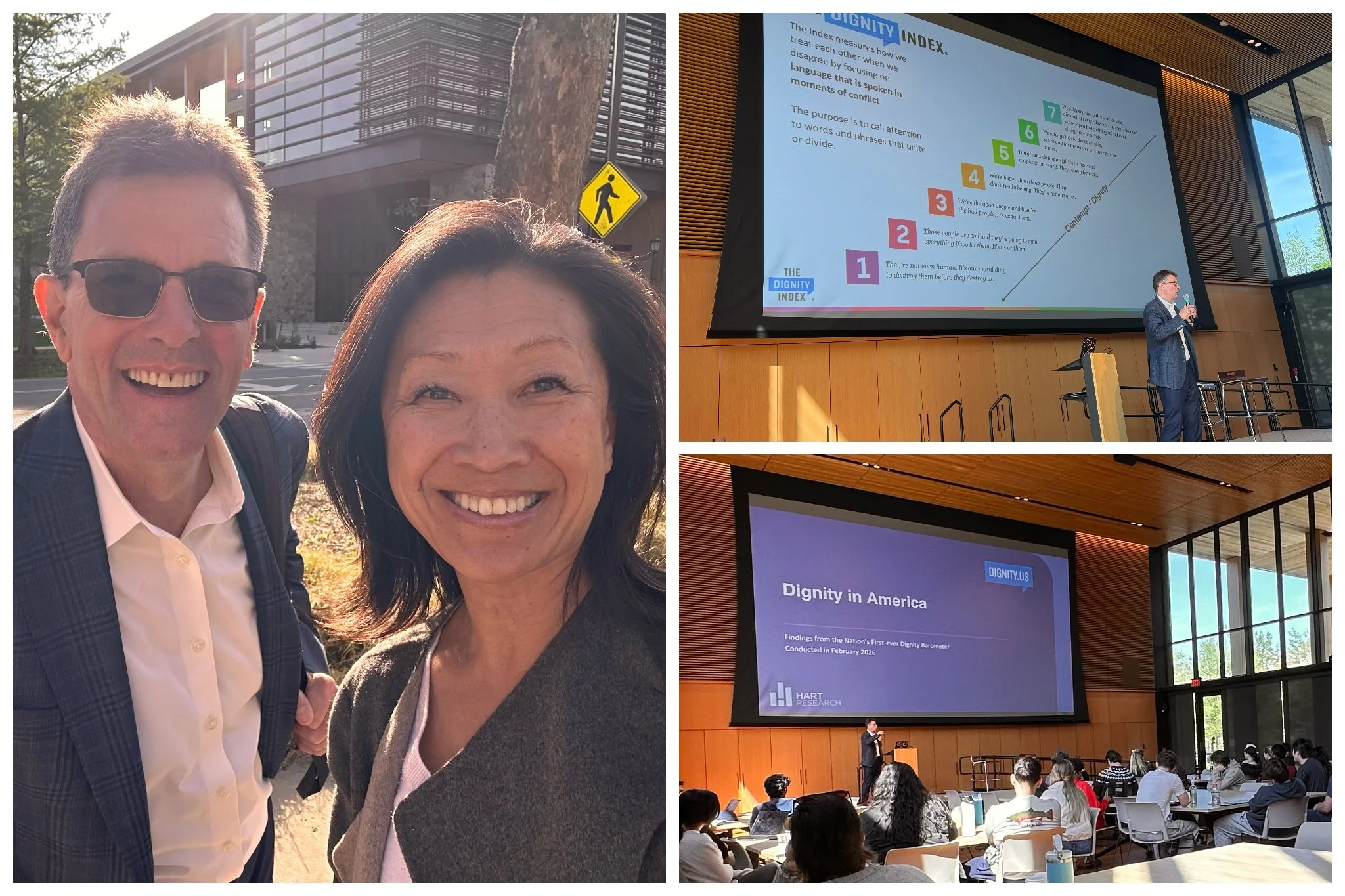
Tom was happy to join UVA instructor and Dignity.us friend Chi Kim as a guest lecturer in her class. It was exciting to discuss the findings from the Barometer in the context of our work. And it’s always fun teaching people how to score with the Index! Huge thanks to Chi for this opportunity.


The Dignity Community brings people together to share stories, learn from one another, and practice dignity in everyday life.  Join us for live chats, free resources, and exclusive community content.

 
Next
Next

Stories from the Road