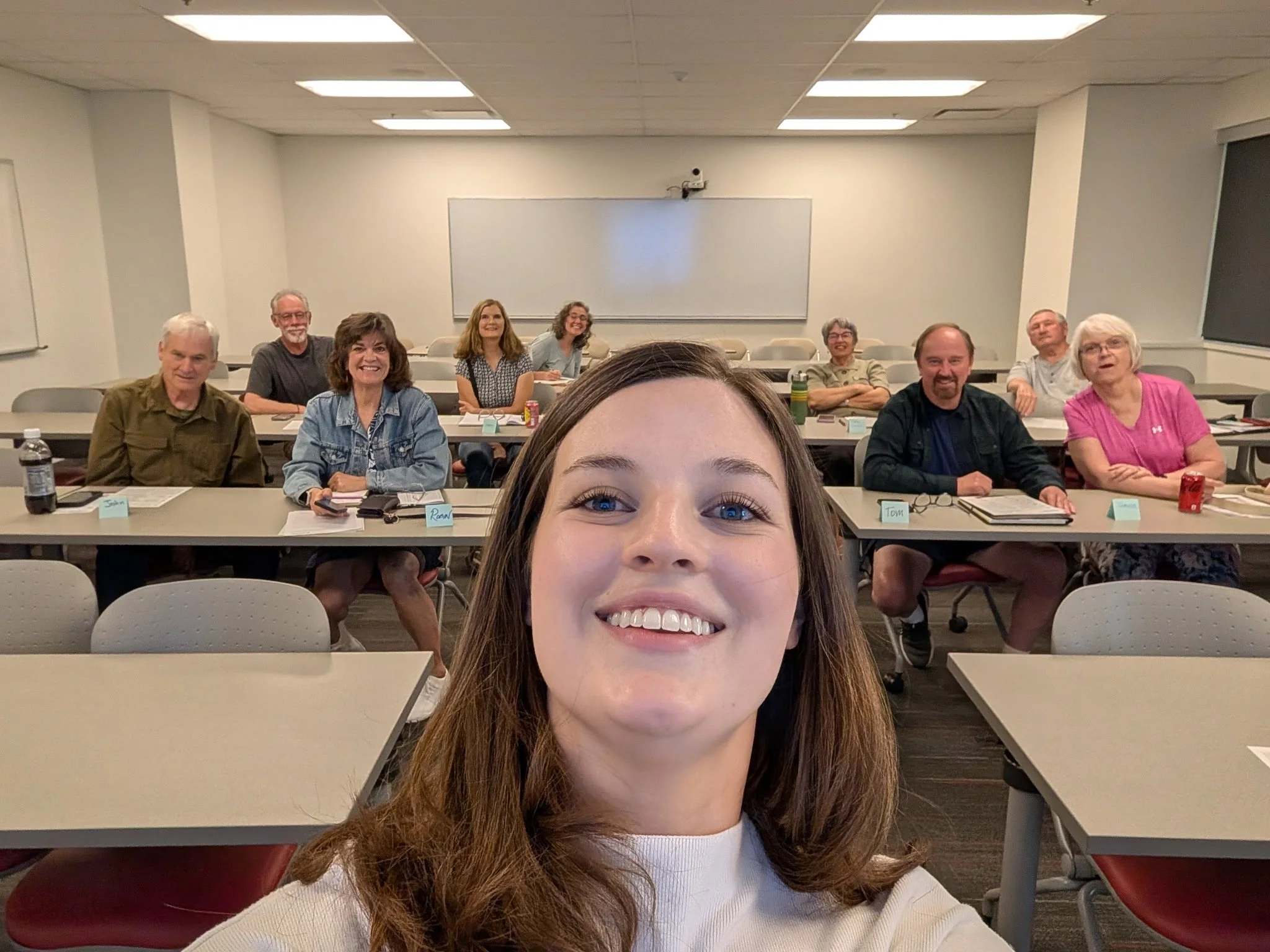
For the past three weeks, I’ve spent more time on the road than at home—traveling across the country, speaking to groups about the Dignity Index, and inviting them to join the dignity movement. The travel can be exhausting, but the work is energizing. I feel lucky to engage with people who are working to heal divides in their communities, schools, workplaces, and families.
As reported in our recently released Dignity Barometer, while 78% of Americans are dissatisfied with the way people treat each other, most are also optimistic that we can heal our divisions (72%). Notably, people who engage with those whose political views are different from their own are more optimistic about our capacity to heal than those who don’t. As our friend and partner Maury Giles, CEO of Braver Angels, puts it: “Engagement across differences does not deepen division. It strengthens the belief that something better is possible.”
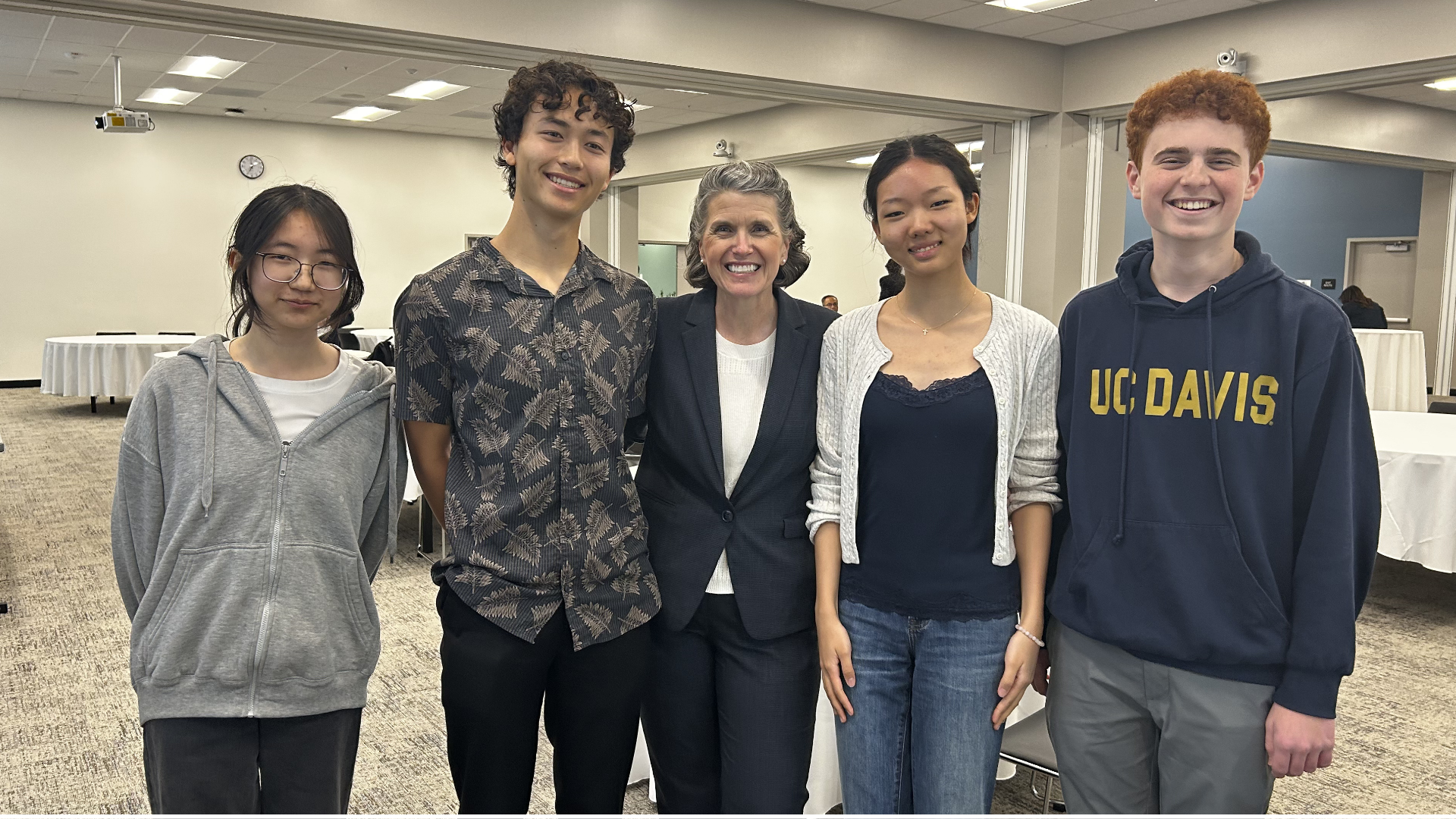
The power of engaging across differences was illustrated by a high school student during my visit with school administrators, board members, PTA volunteers, and students in Irvine, California. After hearing a presentation about the Dignity Index, Ian—a high school senior—shared that a SEVEN on the scale (discussing disagreements, open to changing your mind) reminded him of his part-time work as a software engineer.
“There are different sets of code that can lead to the same outcomes,” he said, “and sometimes there’s competition on the team about which code we should use.” But he said he’s learned that these differences—even conflict—are a good thing, because in the end, multiple perspectives lead to better ideas. Even in writing code.
“We’re all on the same team. We all want the same thing.”
Throughout my travels, I kept thinking about Ian’s words. We’re all on the same team. We all want the same thing.
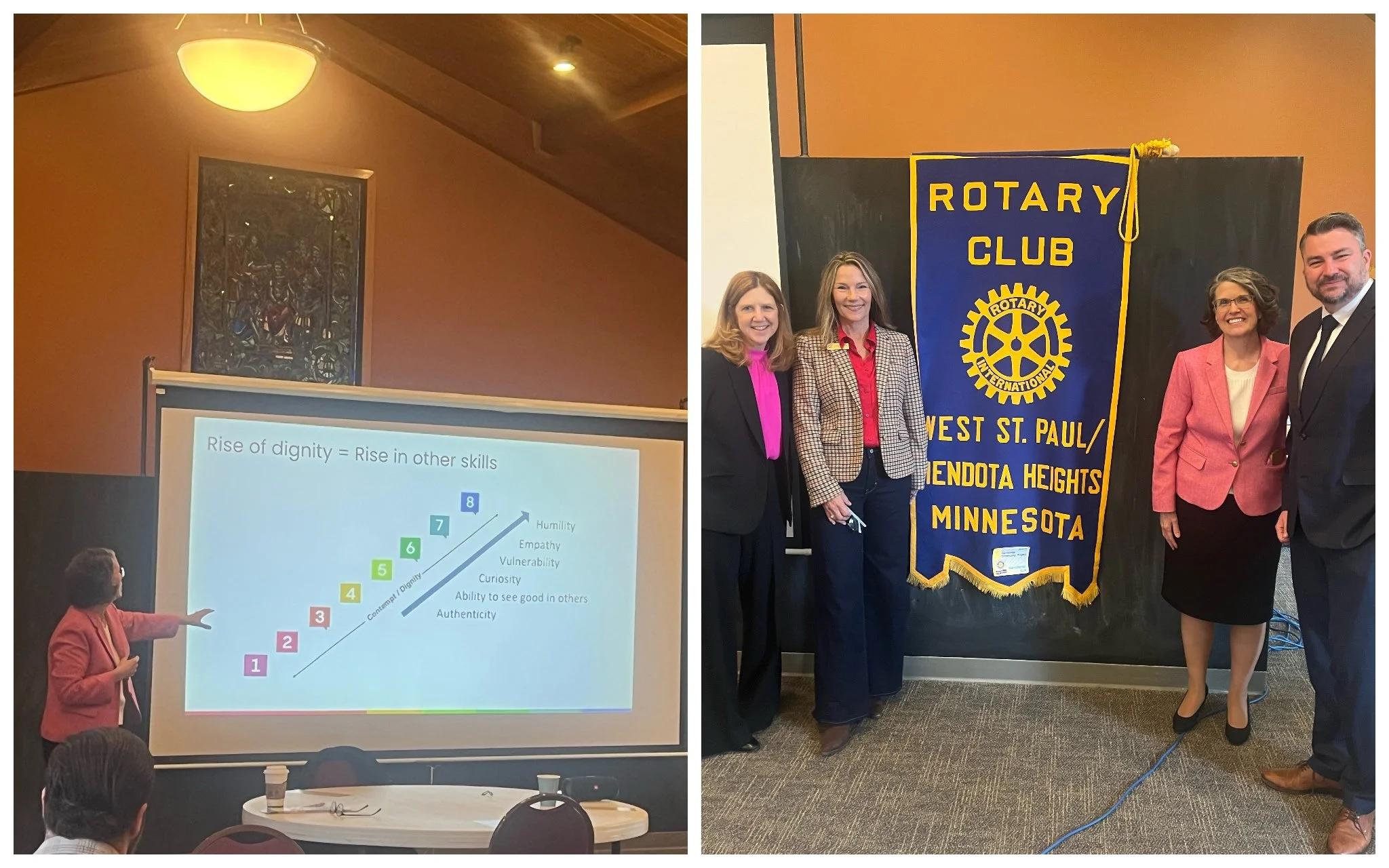
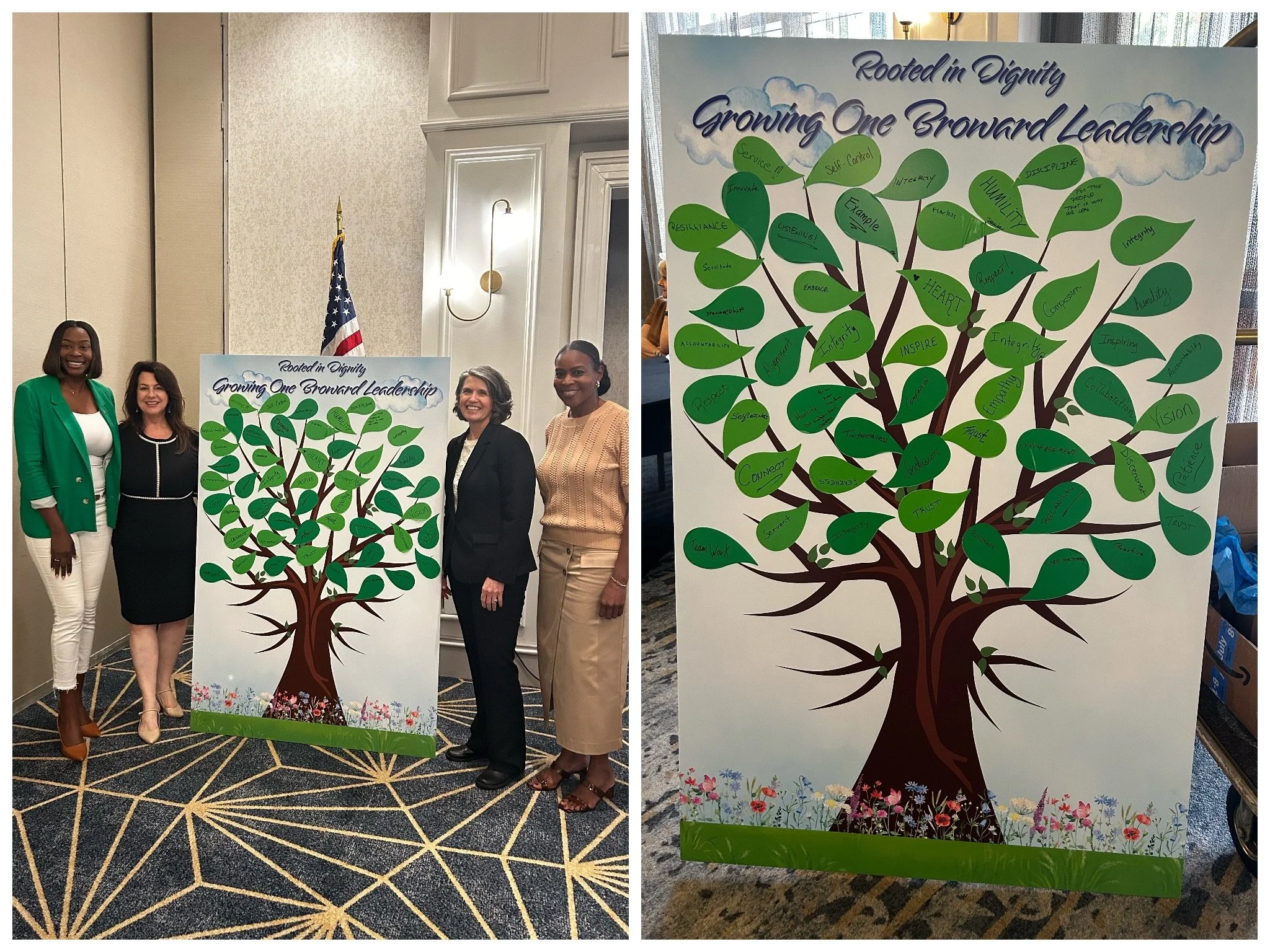
The Rotary clubs I visited in Ojai, CA, and St. Paul, MN, want healthy, peaceful communities. So do the city leaders in Mountain View, California, and Broward County, Florida—who described the role of dignity in their work with words like integrity, humility, service, listening, inclusion, and trust. The hospital and healthcare executives I met with from Texas, Florida, Utah, and the UK are engaged in leadership development that helps ensure effective systems to produce healthy outcomes for their patients. And the business leaders in St. Paul want ideas on maintaining workplaces that promote open and healthy dialogue so that their employees continue to thrive and serve in their communities across the country in the midst of increasingly divisive times.
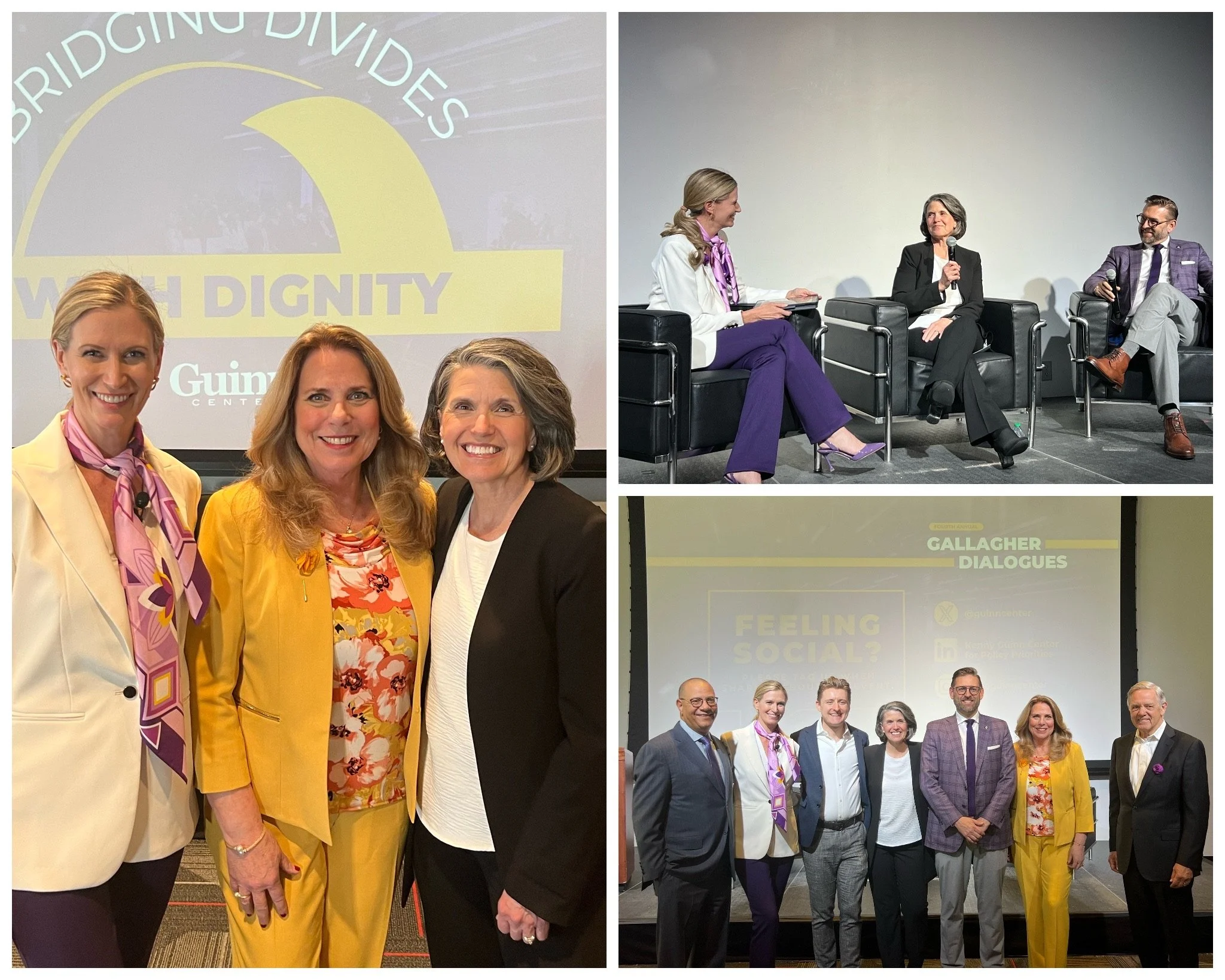
The final stop on my recent travels was a dynamic gathering of leaders from across Nevada—elected officials, K–12 and higher education representatives, business executives, and community leaders. Nevadans from across the state. All on the same team. All wanting the same thing.
The event was sponsored by the Guinn Center for Policy Priorities, a bipartisan nonprofit that works with partners across the state to improve the lives of Nevadans. Jill Tolles, the Center’s director, led a conversation on the role of dignity—and specifically the Dignity Index—in bridging divides in our politics and communities, and joining us in conversation was Brandon Tatum, the new CEO of the National Governors Association and one of our partners. The energy in the room was palpable—a combination of goodwill, optimism, and common purpose. It gave me a huge dose of hope!
What became clear on my dignity road trip was this: It doesn’t matter the state, the political lean, the corporate culture, or the community focus. It all comes back to Ian’s insight; We’re all on the same team, and we all want the same thing: strong families, caring communities, and the chance to serve, to solve problems, and to build something better together. Dignity is what makes that possible.
Tami