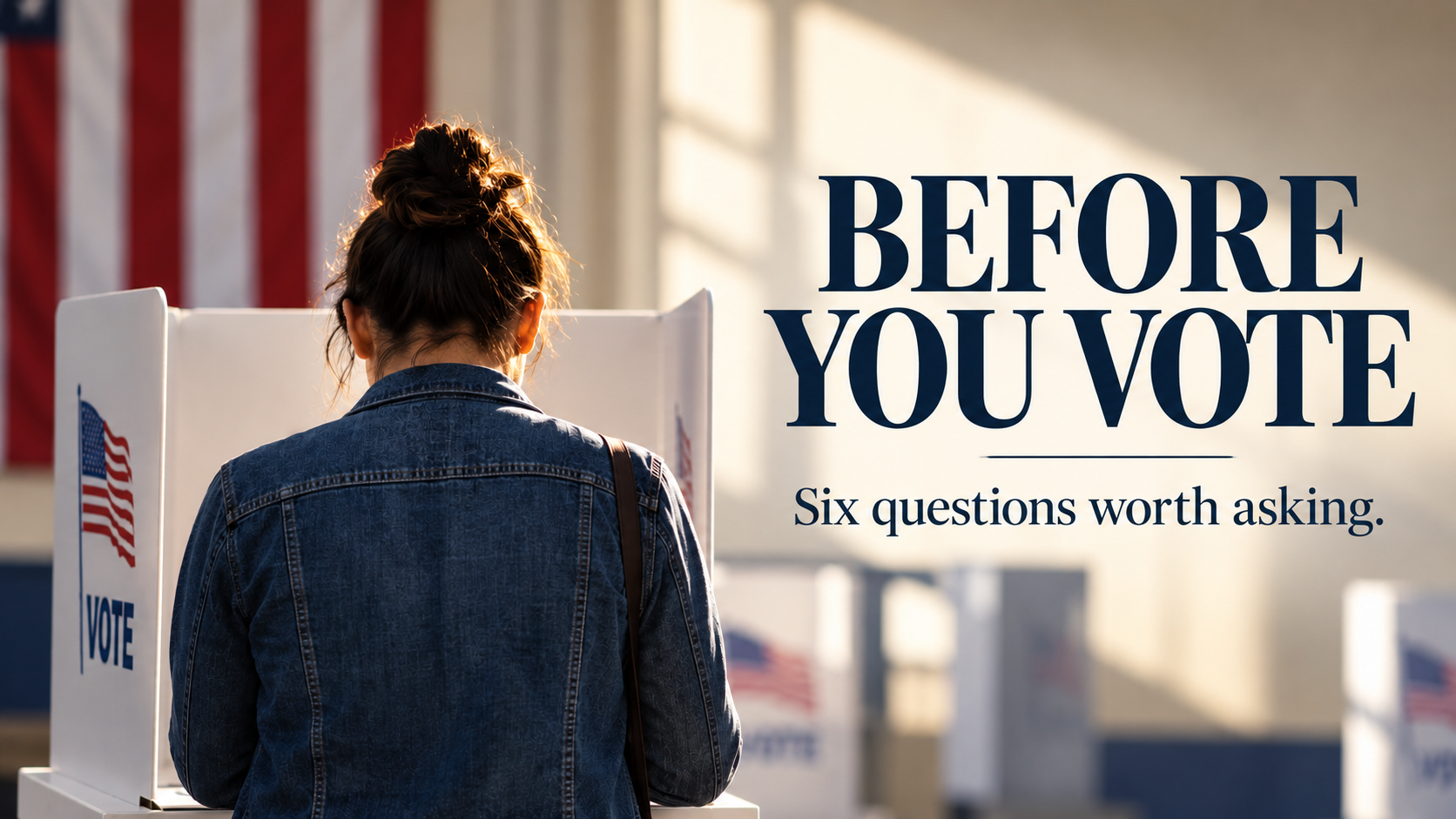
There’s another issue on the ballot: how we treat each other.
$11.6B
spent by candidates and advocates this election, much of it on contempt
$7.35B
the entire budget of the National Cancer Institute
If you’re feeling like you’ve been wading through a flood of sewage over the last few weeks, here’s why: political candidates and their advocates have spent more than $11.6 billion dredging up contempt on one another with the unmistakable goal of trying to make you feel horrible about the country. That’s what our election process has become: an ever more expensive exercise in flooding our senses with disgust and devotional anger and addictive hatred. That’s not an unfortunate byproduct of elections these days: it’s the goal.
Yvonne Abraham of the Boston Globe notes a painful comparison: “The entire budget of the National Cancer Institute—the largest funder of cancer research on the planet—is $7.35 billion.” That’s more than $4 billion less than we spend on making us sick. Imagine what all those billions spent on division could do if it were spent on healing and health care.
And imagine if the super wealthy donors who are choosing contempt chose instead to help children learn to read or help strengthen job training in the age of AI or help promote inclusion for people with intellectual disabilities or help us ease the burdens of aging and loneliness. Instead,
just 50 donors gave approximately $2.7 billion to supercharge their interests, often at the expense of the rest of us.
50 donors · $2.7B
The 50 biggest donors to the 2026 midterms, across both parties and special interests.
See the full ranking →
Only we can make contempt backfire by demanding dignity from our leaders.
The only force that can reverse this destructive trend is us. Only we can tell politicians and their supporters that we’ve had enough. Only we can tell political consultants that the strategy of dehumanizing opponents isn’t working. Only we can make contempt backfire by demanding dignity from our leaders.
Next week, millions of Americans will exercise their constitutionally guaranteed right to vote. Most will choose between a Republican and a Democrat. Many will vote based on issues like gas prices, affordability, border security, and the war in Iran.
But this year, there’s another issue on the ballot: how we treat each other. This issue has no major political action committee. This issue has no special interest group that is giving millions of dollars to candidates it favors. This issue is rarely covered by major media outlets. This issue won’t appear in television or social media ads.
Yet, it’s the issue that’s likely to determine the health of our children, the strength of our families, the effectiveness of our democracy, and the extent of our capacity to solve problems.
Americans are waking up to this challenge. We’re more aware than ever of the toll that contempt and dehumanization are taking on our country. We’re aware that despair about the future is growing in large part because Americans don’t see a way for us to come together to solve our problems. We’re aware that violence is escalating in large part because of the explosion of the rhetoric of hatred and disgust online and in politics. We’re aware that our families and communities are being torn apart by distrust and demonization.
The question now is clear: will we vote based on how candidates treat others? Will we make our decisions based on whether or not candidates have shown dignity for their opponents? And will we recognize that how political leaders treat others is the most important factor in whether or not we reduce the chances of violence, ease divisions, and solve problems?
I hope so.
And with that hope, I invite voters to ask themselves 6 questions before deciding who gets their votes.
Which candidate…
1.has shown more dignity in debate with their opponent?
2.has prioritized solving problems over attacking opponents?
3.is most likely to refresh our belief in each other and the future?
And on the other hand, which candidate…
4.has shown contempt for the opponent, reaching even to dehumanizing or hateful rhetoric?
5.is most likely to intensify divisiveness in our country?
6.is most likely to lead our young people to despair about the future?
These are not partisan questions; they are American questions. Nothing is more American than believing in each other and believing we can solve any problem. And nothing is more un-American than cynicism and snark. It’s time our political leaders hear that message from all of us.
Billions of dollars have been spent to addict us to contempt and division. I hope this is the election where all that money is wasted.
Be a Dignity Voter. Ask your leaders to lead with dignity. Ask your friends to join you. It will cost you nothing but may well give you a country worthy of all of us.
— Tim