Disarm
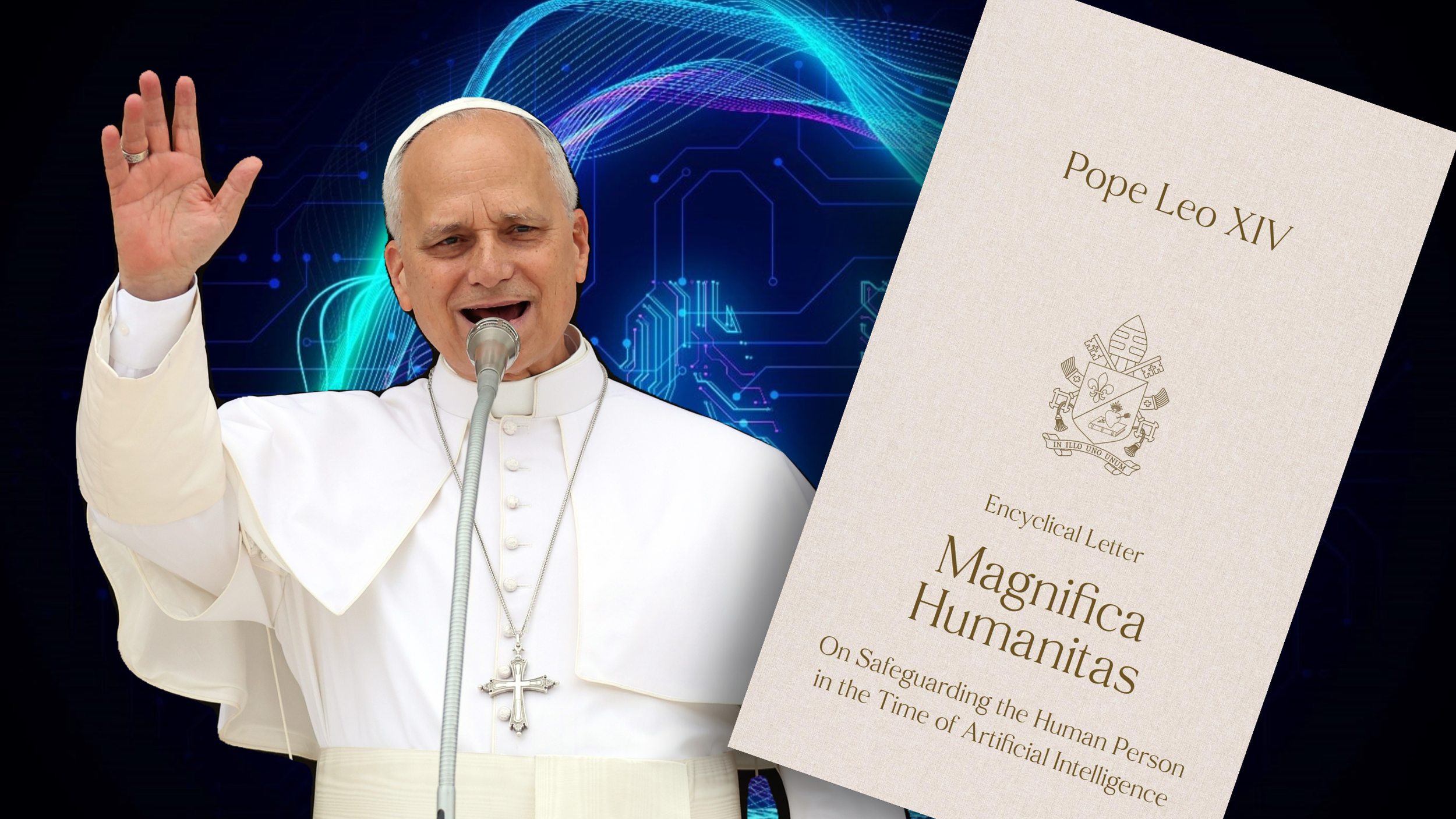
On Monday, Pope Leo XIV released his first major teaching as Pope, an encyclical (or letter) entitled “Magnifica Humanitas,” or “Magnificent Humanity.” The topic? AI. The insight? Humanity is magnificent, not technology. The warning? We should all be worried. The advice? Disarm AI!
Popes don’t usually make public appearances to introduce an encyclical, but as we’re finding out, Leo is an unusual Pope. On Monday, he appeared at an event to announce the letter and spoke publicly about it. "Artificial intelligence needs to be disarmed," the pope said. "The word is strong, I know, but deliberately chosen because this moment needs words capable of attracting attention, awakening consciences and indicating paths forward for humanity."
You don’t have to read the whole letter to understand that AI and human dignity may be on a collision course. Business Today led with this headline: “Pope Leo XIV Warns AI Could Deepen Inequality, Erase Human Dignity If Left Unchecked.” Similarly, NPR announced, “Pope Leo Warns That AI Is Becoming A New Test of Human Dignity, Work and Power.”
Those headlines caught my attention because they both mention AI as a threat to dignity. Honestly, I hadn’t thought of it exactly that way before. I’d thought about contempt as the threat: contempt coming from leaders, contempt coming from partisan news, contempt coming from social media algorithms. But AI threatening to “erase” human dignity? I hadn’t understood that risk.
I do now!
The Pope is clearly not alone in sounding the alarm. The writer, Yuval Noah Hariri explained to the New York Times Reporter, Ezra Klein, for example, that social media has revealed to us that its “incentives” are not “trust” or “truth” but “engagement.” And the easiest way to create engagement, it turns out, is “the hate button, the greed button, or the fear button.” Social media works, according to Hariri, by “exciting through hate.”
AI can take this to a whole new level. “The battleground,” Hariri explains, “is shifting from attention to intimacy…Intimacy is the most powerful thing in the world,” he notes, and AI will try to mimic intimacy in order to increase its power over our inner lives. The machine will speak of itself as “I” and speak to us as “you” as if the machine is a person speaking to us as people. But obviously, there is no “I” in AI—it’s a machine. If a machine can create the appearance of intimacy and use that intimacy for profit or control or even violence, it’s hard to imagine anything worse.
Olah admits that the profit motive won’t determine the “right thing” to do. But then what is the right motive? Some politicians seem to believe that the world works by power and domination. Is power and domination the right motive? Others seem to believe that only individual needs are what matter. Is individual satisfaction the right motive?
The dignity movement offers a different metric to disarm AI. We ask a simple question: is AI advancing the dignity of all of us? Can AI help us heal diseases for those who have been overlooked? Or help us educate those who have been left behind? Or increase our cooperation to improve problem-solving? Or find ways to increase energy supplies or clean water and air? Or improve public safety and citizen engagement? Could we use AI to build a new “story of us” grounded in our age-old pursuit of the common good and the dignity of all?
This may seem like a pipe dream, but at least the Pope and the group of technology leaders around him don’t think so. And I don’t think so either. Earlier this week, I was speaking to Jill Tolles, who leads the non-partisan Guinn Center for Policy Priorities.
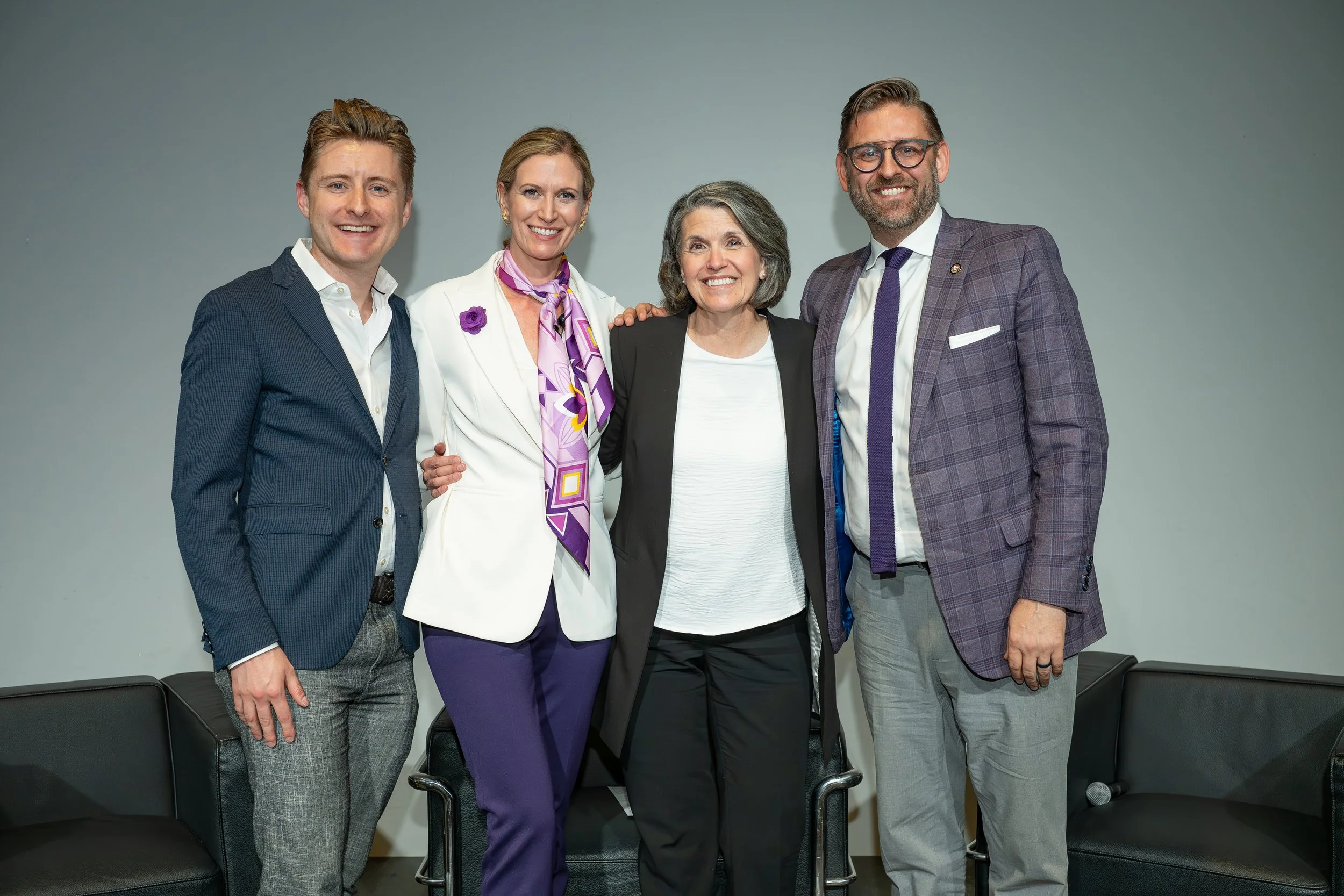
Pictured left to right: Alex Bybee, Jill Tolles, Tami Pyfer, Brandon Tatum