Some people are surprised to hear us say this—because they think “if you’re discouraging contempt, you’re discouraging speech.” But the opposite is true. Contempt keeps people from speaking their minds. So if we discourage contempt, we encourage speech.
Let’s think about it for a moment. Contempt is a huge threat to free speech. In many political organizations today, contempt is a requirement for group belonging. If you want to be a member of our group, you have to hate that group. If you defend the dignity of that group, you can’t be a part of this group.
That’s the opposite of free speech. That’s group censorship, and it’s a dominant feature of our politics today. Free speech is under assault—and dignity is under assault—and they’re both being assaulted by contempt.
Just recently, I was lucky to be a panelist at an online event that included free speech leader Greg Lukianoff, the founder and CEO of FIRE: the Foundation for Individual Rights and Expression.
FIRE has a campus free speech ranking which gets a lot of attention—and deserves even more. In his 2025 TED talk, Greg tells a story of a group of 200 students shutting down an event because they disagreed with the speaker, and Greg said, “You do not have the right to shut down someone else’s talk and decide for everyone else who they are allowed to hear.”
Of course, defending free speech means defending the right of opponents to protest a speech, but free speech does not extend to shutting down another speech. And this aligns with how we like to describe protecting free speech in a dignity culture: we say what we think, but in a way that encourages others to say what they think.
Greg makes another penetrating point—especially for college campuses where people come to seek knowledge. “If you want to understand the world, you have to know what people really think.” And he takes the point further, “You are not safer for knowing less about what people really think.”
As our Dignity Team sees it—and this is a feature of SEVEN on the eight-point scale—we want to know what people think, especially when we disagree, because this is where we grow the most. This is where we’re most open to learning something new, admitting mistakes, or changing our minds. This is where we’re willing to defend the dignity of people on the other side, even when it costs us belonging. (And Free Speech Advocates are special experts at that!)
As Greg put it, “labeling someone ‘woke’ or ‘fascist’…. doesn’t have anything to do with whether they are right…. The way we figure out truth is a process of checking and re-checking—and it doesn’t work if you just talk to people you already agree with.”
But the moment in Greg’s talk that made me feel the greatest alignment between free speech and honoring dignity came at the end when he said:
“To understand the world, it’s crucial to know what people really think, and that is only going to happen in a situation in which people feel they can be their authentic selves.”
That’s the alignment between free speech and dignity. Free speech happens when people can be their authentic selves, and people can be their authentic selves when they’re treated with dignity.
That’s why we can say that treating people with dignity protects free speech.
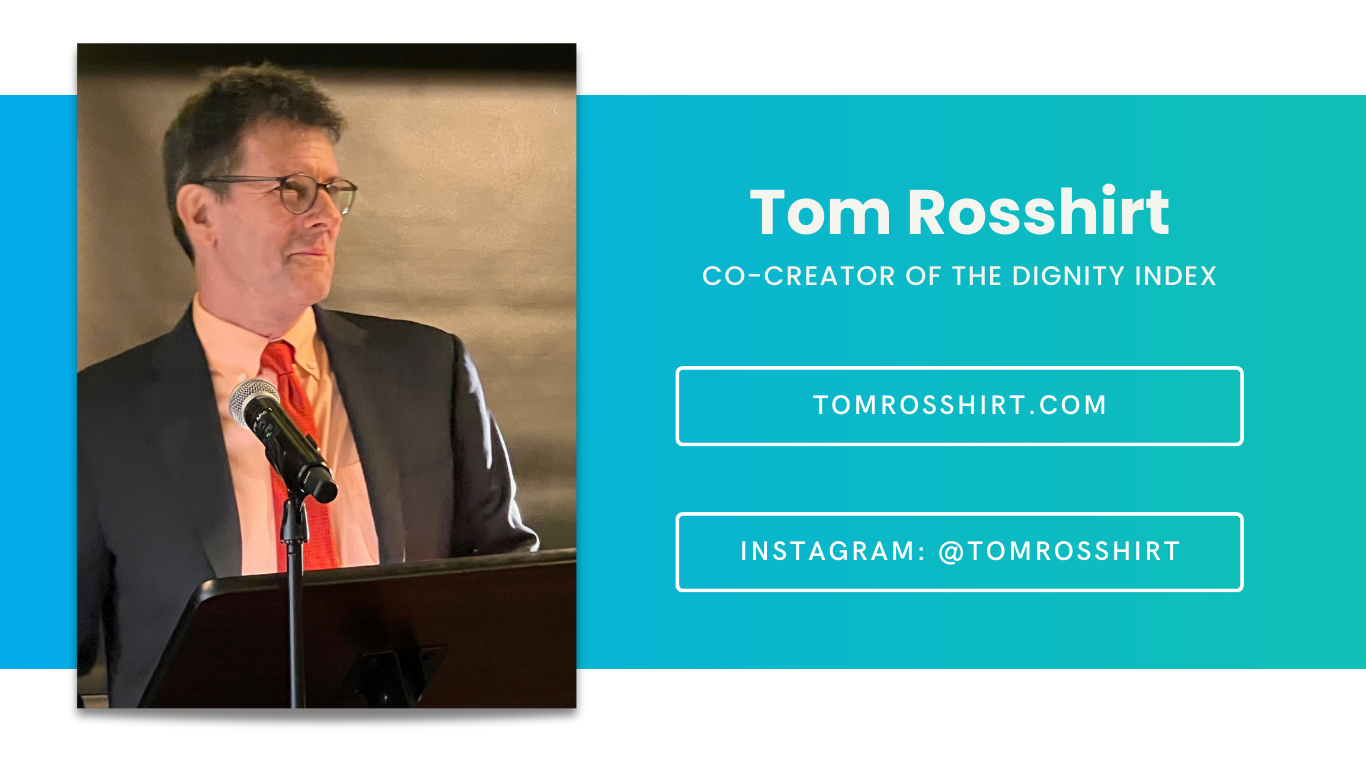
Tom Rosshirt
Defend Free Speech By Leaning Into Dignity
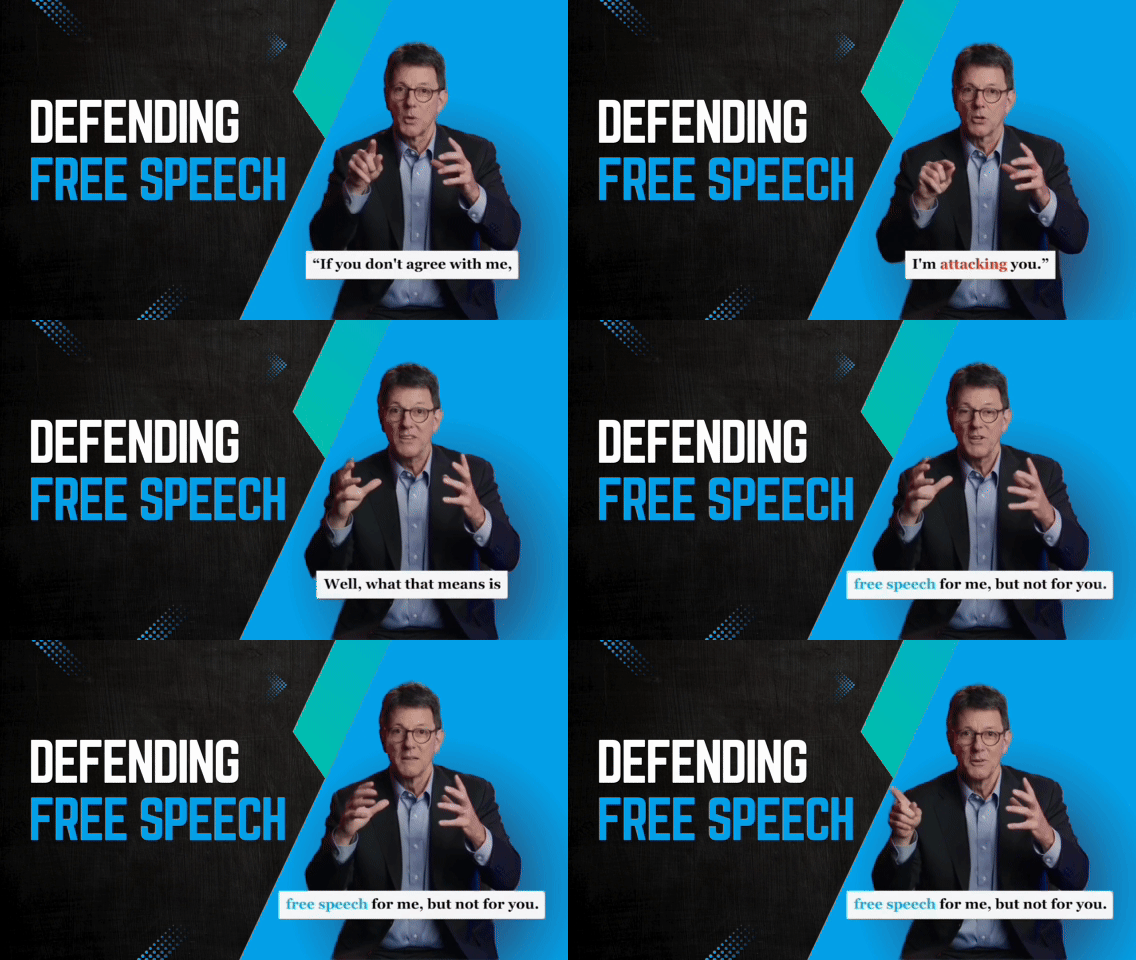
As the new year begins, many people are thinking about resolutions that actually make a difference. In this video, Tom explains a core truth: dignity doesn’t shut people down. It creates space for people to say what they think, in a way that encourages others to do the same.
In the year ahead, this may be one of the most meaningful resolutions we can make.
The Dignity Community brings people together to share stories, learn from one another, and practice dignity in everyday life. Join us for live chats, free resources, and exclusive community content.