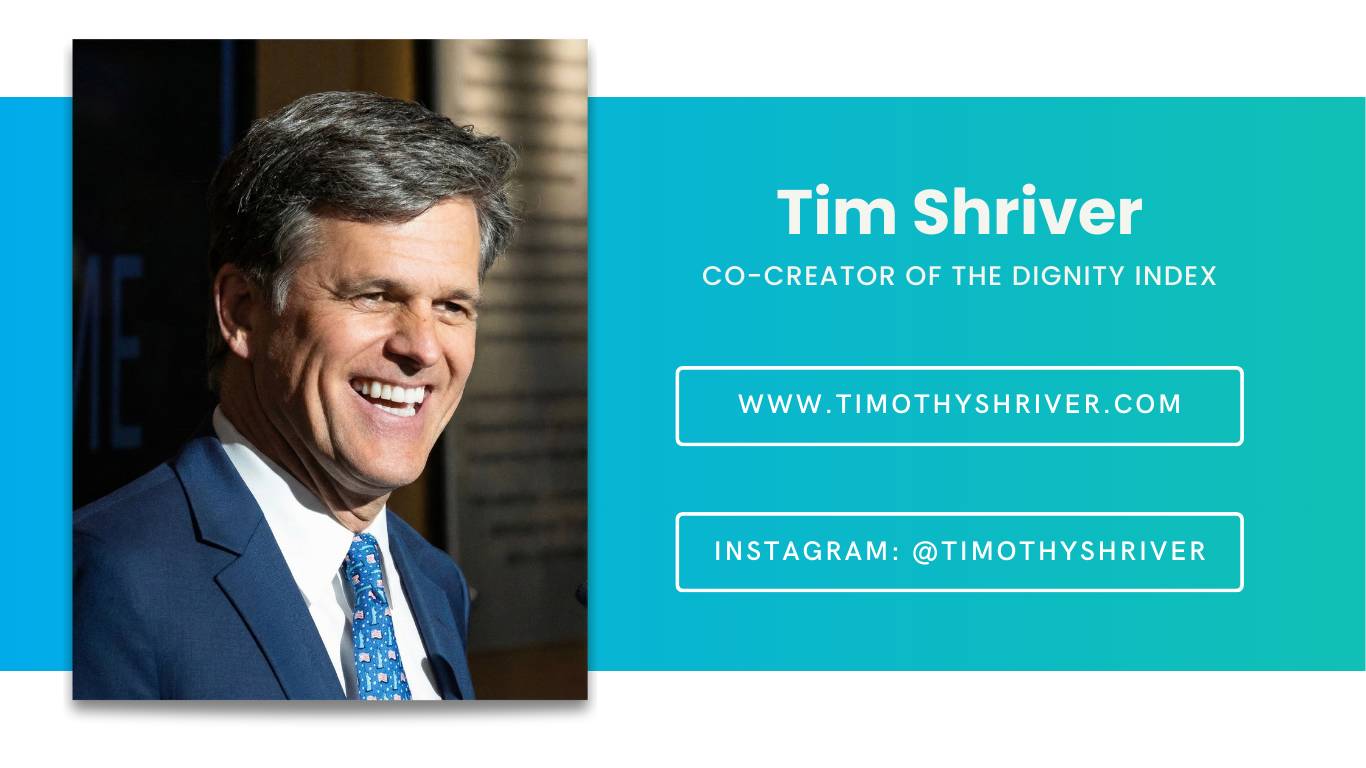
Tim Shriver with Governor Wes Moore, Governor Kevin Stitt, and Laura Collins from the George W. Bush Institute
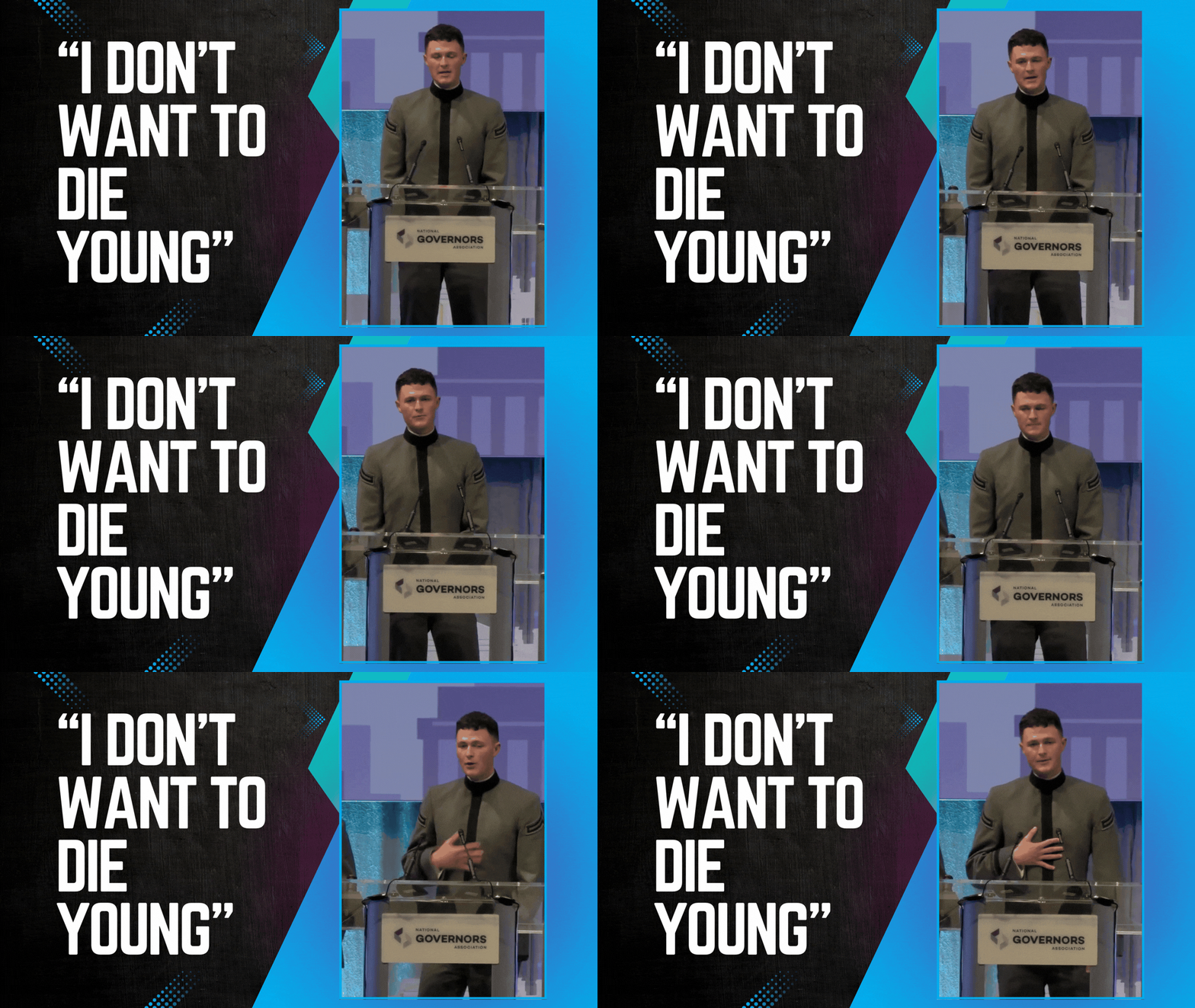
“I don’t want to die young.”
Those were the words of Lucas Haase, a West Point cadet who was invited to address the National Governors Association annual meeting in Washington, D.C. last week. He was at the conference hall with 11 classmates who’d come to D.C. as part of their study of political science. His audience included governors from more than 20 states, corporate leaders, and nationally prominent journalists.
His message was clear: “I don't want to die young, but if I do, I want it to be for the friends I've made in this uniform, for my family back in Kansas, for the values in the Constitution of the United States of America, and for the people in this room.” I felt an immediate intensity in my body. Several times in my life I’ve felt the stinging pain of losing someone in my family or someone I loved who died young. Accident. Violence. Disease. And then shock. Unimaginable sadness. A pain that never disappears.
None of them wanted to die young.
But there was Haase, standing in front of a crowded room of national leaders offering the unimaginable: the willingness to die young so that others might grow old. In front of him were people with agendas. People with legislative goals. People with power and influence. And he offered just one gift: his life. Would any of us, I wondered-- privileged, influential, powerful-- be willing to say the same? Would we, in our comfort, be like him in his bravery? Would we die for each other? For the constitution? For our country?
In the same meeting the governors heard a presentation from veteran pollster Frank Luntz, with polling on the national mood. The data he brought was conclusive: Americans are losing hope in themselves, in each other, and in their leaders. Luntz said that a key word that governors should use is respect. “Americans want you governors to show respect to each other. The tone in the country is fearful and angry. You can and must do something about it.”
“Respect” scored high in Luntz’s polls as a word that resonates with Americans. But in reflecting on Cadet Haase’s statement, I returned to our word: dignity. Haase didn’t offer to give his life for those in the room he respects. He didn’t ask us to earn his respect by being a part of his political party or by sharing his political views. In fact, his offer was grounded in something far deeper: the dignity of all Americans. He and his fellow service members said they are willing to risk their lives for all of us—for our freedom, for our happiness, and yes, for our dignity.
That’s why I don’t think we need a respect movement. Respect is something you earn. You can give it today and take it away tomorrow. With “respect,” you’re saying, “You have to pass my performance test before I decide if I’m going to treat you well.”
We need a dignity movement. Dignity is different. Dignity is an essence. It’s the inherent worth we all have from birth. And we either honor each other’s dignity and prosper, or we violate each other’s dignity and suffer.
That’s a hard message, but those cadets know a lot about what it means to do hard things. A few hours after Haase spoke, I was with him and fellow cadet Farrell Kehm in a “green room” with several governors. One governor explained his leadership message to the cadets this way: “My goal is to make life easier for the citizens of my state. I just focus on the basics of how to make life better.”
Kehm spoke up again: “Thank you, Sir,” he said with a typical West Point respect, “but what about hard things? Do you ever talk in your state about issues like sacrifice and challenge and doing things that are hard?”
The room went quiet. The governor responded, “I don’t think I’d get elected if I told people I was going to make life hard!”
I could see that Kehm was disappointed and so was I. I understand the importance of making life easy for Americans. I get that we all want things to be easier—easier to raise a family, easier to get an education, easier to earn a living wage, easier to afford a home.
But what about the things that are hard? What about transforming our energy consumption to protect the planet? Hard. What about raising the standards and supports for our schools? Hard. What about solving the scandal of our failed immigration policy? Hard. What about protecting our farms and our food supply? Hard. What about ending childhood poverty? Hard, hard, hard.
All of these are hard because they demand that we give of ourselves, that we join in common effort, that we disavow a politics of contempt for the other party, that we be creative as never before, that we take a pass on cynicism and take a chance on the practical idealism that has always made our country great. Perhaps more than anything, to do hard things we need to see through the lies of the contempt industrial complex and believe in the dignity of our fellow Americans. Right now, that’s hard. But it’s one hard thing every political leader can model and inspire us to do.
I left the National Governors Association with a lot of hope. Governors Kevin Stitt, Wes Moore, Spencer Cox, and others spoke over and over again about leadership with dignity. The NGA’s new CEO, Dr. Brandon Tatum spoke powerfully about the importance of a non-partisan approach to leadership, and he held the Association together when some thought it would collapse. It was refreshing to see people from all over the country and from every political perspective working together. “This is the country I want to live in,” I thought over and over again.
But what gave me the greatest hope was Kehm and Haase and the young people of West Point. They represent the best of us—ready to serve, ready to do hard things, ready to risk their lives. They are leaders of the dignity movement. They come from many political perspectives, they respect their senior officers, and they are willing to die for us all.
I learned a lot about dignity from the cadets of West Point. I hope the Governors did too. I hope all Americans understand how privileged we are to have them as our leaders.
Tim