The Power of Trendsetters

This past week, I spent a lot of time talking with my colleague Dr. Samantha Ball about the “dignity gap” – the dramatic finding from our Dignity Barometer, published last March.

The Barometer tells us that 94 percent of Americans believe all people deserve to be treated with dignity – and yet only 31 percent of Americans believe people are actually treated that way. 

Why is there such a big gap between what we value and how we act?

We believe part of the answer is found in what cultures encourage and reward. When people can get wealth, fame, power and belonging for mocking and insulting others, they’re living in a culture of contempt – a culture that rewards them for using contempt.   

Cultures of contempt are spread all over the United States today. But here’s the tension and the opportunity: what the culture rewards is not always the same as what the individuals in the culture value.  

In many cases, our culture discourages us from treating people with dignity. And because we often have mistaken beliefs about what others think, we’re often left feeling that we’re the only ones who value dignity.   

So we don’t question the culture.  

This is what we believe is happening in many cultures of contempt: people whose conscience would ordinarily prompt them to treat others with dignity will use contempt instead. And they use contempt because they believe using dignity will leave them isolated and excluded.    

So, part of our work at dignity.Us is to start conversations so we can discover together that almost all of us value treating others with dignity. And once we know that, we can join together to change our cultures to support our values.  

Dr. Ball shared with me an article by Cristina Bicchieri and Hugo Mercer that supports this analysis. It’s titled: “Norms and Beliefs: How Change Occurs,” and it includes this passage:  

“Social norms about proper behavior that are widely shared … are often regarded by their very members as too strict or even plainly wrong, but nobody dares to question the shared rules for fear of negative sanctions.”

This passage helps explain our situation and our strategy:  

We know from our data that the vast majority of Americans believe that we should treat people with dignity. We also know that many cultures in the United States make it a requirement of belonging to treat others with contempt.

In these cultures, people won’t question the norm of contempt, first because they fear they will face backlash, but also because even though they believe contempt is wrong, they think everyone else believes contempt is right. So, they keep quiet and go along.  

The article then adds: “The most common hindrance to a candid discussion of the norm is the existence of norms that dictate how one should talk about norms.”   

The authors are telling us – even talking about the norms is against the norms. So the conversations that would reveal a shared value about treating others with dignity don’t happen, because even a conversation that questions the norm would violate the norm.

How do we break this impasse? The Bicchieri article says:  

“It has been shown that it may take a small number of ‘trendsetters’ who question the standing norm and start behaving differently to effect a major change.”  

Trendsetters. These are people who are willing to challenge the norms before it’s socially safe to do so. These are the people who can carry the message that we all share a common value – that we should treat others with dignity even when we disagree – and that if we honor this value, we can ease divisions, prevent violence and solve problems in our country.  

When these trendsetters get the attention of critical numbers of people and rally them around the universal value of dignity, change has begun. And when people see that change has begun, many will start joining the change until the balance shifts, a tipping point is reached, and people see they can honor their values without paying a price.  

Success depends on the trendsetters. How many are there? Where are they? Who are they? That’s hard to know – but there is one thing we’re pretty sure of: If you are reading this newsletter right now, it’s likely you are one.   

Thank you. 

-Tom Rosshirt


Dignity in Action

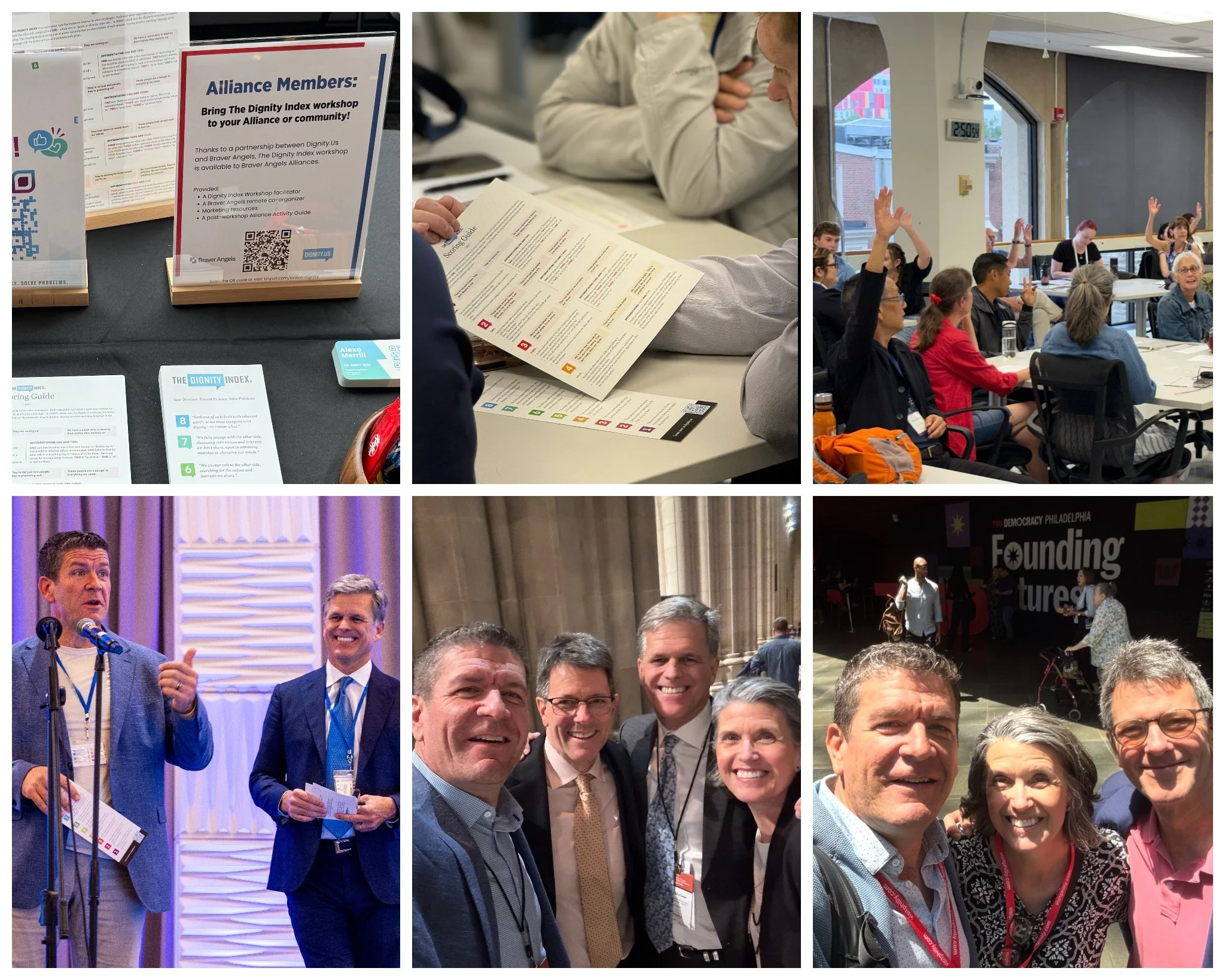
Meaningful change happens through collaboration, and for the last few years, we have been involved with many "bridge-building" groups. One of those partners has been Braver Angels -- a grassroots organization dedicated to helping Americans bridge political divides. We are excited to announce a new formal partnership with our friends at Braver Angels!

Together, we're bringing our Dignity Index workshops to Braver Angels Alliances across the country, equipping members with a practical framework for recognizing dignity, reducing contempt, and strengthening conversations across differences. We're incredibly grateful for the leadership and vision of Maury Giles, the new CEO of Braver Angels, who has been a great supporter of our work and a leader in the bridge-building space. We're excited for what comes next!



Next
Next

I Majored in Figuring it Out