In our toxic political environment, with leaders feeling increasing pressure to demonstrate strength by “fighting fire with fire,” evidence continues to point to the contrary: that leading with dignity is the way forward.
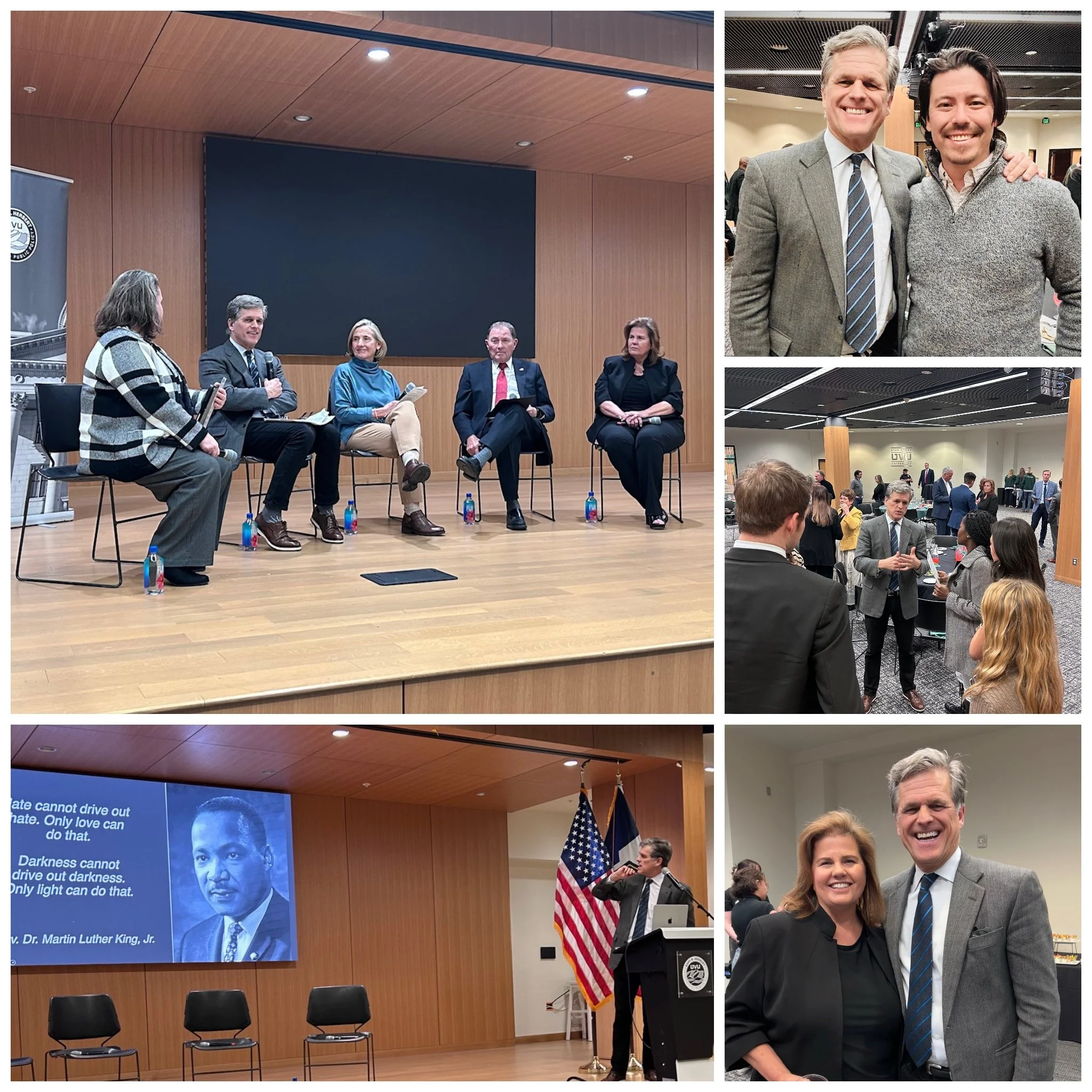
This weekend, I reflected on the example of Dr. Martin Luther King, Jr., not fighting fire with fire but confronting injustice through consistent, persistent nonviolent action. Much of our dignity movement work is grounded in the principles he taught: that “darkness cannot drive out darkness; only light can do that… hate cannot drive out hate; only love can do that.” King led change with passion and moral force that remains a model for how we can show up in increasingly dark and threatening times.
A powerful illustration of that moral force came on April 4, 1968, the day Dr. King was assassinated. Robert F. Kennedy, then campaigning for the Democratic nomination for president, arrived at a rally in Indianapolis to learn that King had been killed. Despite warnings from local leaders and police to cancel the event, Kennedy refused. Standing before a large crowd in a predominantly Black neighborhood, he turned to a local organizer and asked, “Do they know about Martin Luther King?”
Told they did not, Kennedy shared the news of King’s death, spoke openly of shared grief—including the assassination of his own brother—and appealed to the crowd’s moral agency. He urged them to “make an effort, as Martin Luther King did, to understand and to comprehend, and to replace that violence… with an effort to understand with compassion and love.”
“What we need in the United States is not division,” he said, “not hatred… not violence or lawlessness, but love and wisdom, and compassion toward one another, and a feeling of justice toward those who still suffer within our country, whether they be white or they be black.” He ended by asking the crowd to return home and pray—not only for King’s family, but for the nation itself, “a prayer for understanding and that compassion of which I spoke.”
Once news of the assassination spread, riots erupted across the country. More than 100 cities experienced civil unrest; at least 40 people were killed, and more than 20,000 people were arrested.
But not in Indianapolis.
Police records show no major incidents that night, and journalists on the ground reported that crowds dispersed quietly. Kennedy aide Fred Dutton later reflected, “that night, Bobby spoke from the place Martin had been trying to take the country.”
Amid the tragic and chaotic events unfolding in the country, I am witnessing people who are mobilizing to fight injustice but refusing to return hate for hate.
Neighborhoods are providing needed services for those in their midst living in fear. People are organizing non-violent marches and protests. Someone in our own dignity community is working with others in her city to create a Resist with Dignity group, based on the teachings of Dr. King and the work of the Dignity Index.
In a time when public life feels increasingly volatile, the example set by leaders like Martin Luther King, Jr., and Robert F. Kennedy reminds us that rather than fighting fire with fire, the most powerful response to contempt and hatred is to hold fast to dignity—and, in doing so, help extinguish the flames.
Tami