Dignity on Stage in Philadelphia

Photo credit: TED / Gilberto Tadday
It’s a special thrill to see an exceptional public speaker give one of her best speeches. I had that thrill last weekend when I saw Tami Pyfer make the link between Dignity and Democracy in her TED talk in Philadelphia.
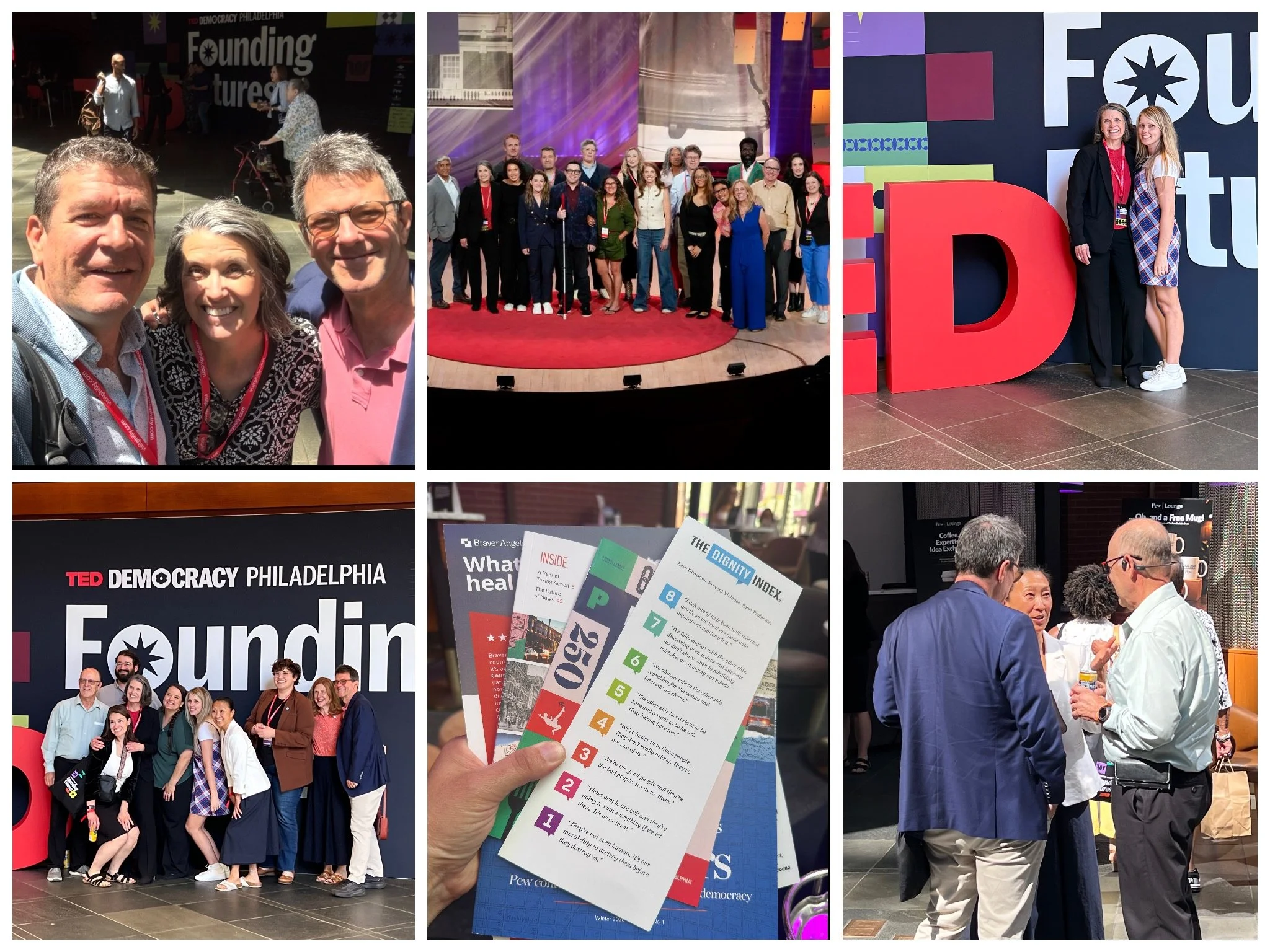
The June 13th TED Talks, held in our first capital city to commemorate the birth of our country, were given just a short distance from where Thomas Jefferson—on the very same day 250 years before— was busy drafting a document declaring this newborn country’s independence from Great Britain.
Tami’s presentation was masterful. If you’ve been lucky enough to hear Tami speak, you know that she is a cross between a kindergarten teacher and a Head of State. In fact, Tami is what a President would look and sound like if love and wisdom were qualifications for high office.
She opened with a touching and totally relatable story about how differing political viewpoints were causing division in her family. She said she noticed that it was not just competing convictions that were driving their conversations—it was contempt.
Contempt, Tami told the TED crowd, is this feeling that we’re better than others, that they’re not just wrong, but dangerous, not just mistaken, but evil. Contempt, Tami explained, “erodes trust, weakens relationships, and divides communities. Over time, it damages democracy itself.”
But contempt has an antidote, Tami said. And the antidote is Dignity, "the inherent worth of every human being—not because of what we believe, not because of what we achieve, but because we are human.”
It seems it should be a simple thing to use more dignity and less contempt. Actually, though, it can be almost impossible to use more dignity if we can’t see our own contempt. That’s the value and power of the Dignity Index. When we first hear about the Index, Tami says, we take it up as a helpful tool for judging others—our senator, maybe our boss, maybe our spouse. But as we learn to recognize the words and phrases that signal contempt, suddenly a memory comes to mind of a conversation where we dismissed someone or mocked them for their views or rolled our eyes at them, and we realize: “Oh wow, that was contempt.”
That’s the mirror effect: the moment where we can see our own role in the division and realize we can choose something better. That’s the insight that comes from the Index, and, as Tami says, it can change our political conversations, it can change a workplace, a community, even a family.

Photo credit: TED / Gilberto Tadday