

Let’s Solve this Riddle

By Tom Rosshirt | Chief Strategist & Director of Research, Dignity.Us
If we’re going to ease divisions in our country, we’re going to have to solve this riddle:
Why does our culture reward contempt when we value treating people with dignity?
Two weeks ago in this space, I cited research that offers an important clue.
Cristina Bicchieri, Professor of Philosophy and Psychology at the University of Pennsylvania and expert on social norms, writes, “social norms are often seen as wrong, but nobody dares to question the shared rules for fear of negative sanctions.”
In other words, we’re afraid to treat the other side with dignity because the norm is to treat them with contempt. If we defy the norm, we expect to get attacked – so we go along with it even when we’re uncomfortable with it.
And there’s an element that adds to the fear that powers the norm. We think everyone agrees with it. We don’t hear people speaking against contempt. We don’t see people valuing dignity, so we assume we’re alone. And it’s hard to challenge the culture when we think we’re alone.
This points to a second clue to solving the riddle: we have to help the people who believe in dignity find each other, talk to each other, and bond together over their shared values. It’s easier to challenge the culture when we know we’re together.
A third clue to solving the riddle is offered by Bicchieri when she writes: “It has been shown that it may take a small number of trendsetters who question the standing norm and start behaving differently to effect a major change.”
Trendsetters get people talking. They help dignity supporters find each other, see dignity is a shared value, and find the courage that comes from forming a community.
Trendsetters activate several behaviors that can help solve the riddle. But timing is critical. When is the time ripe for trendsetters? And what actions need to follow so the trend grows?
We might get more clues by trying to piece together the path to a dignity culture.
The path
These steps sketched out below don’t always form a progression. They can come in a different sequence, and several can come at the same time. But taken together, they can throw a light on the path to change. Let’s have a look:
Before change begins, people in a culture of contempt largely go along with the norms of contempt even though they disagree with them.
People begin to see more clearly that they value treating others with dignity, that their behavior is inconsistent with their values, and that causes them tension.
People begin to realize that they are not alone – that others share the value of treating others with dignity.
People begin to talk with each other about dignity -- making their shared values visible to each other and to others who hear the conversation.
Trendsetters defy the norms, speak against contempt, and treat others with dignity before it’s socially safe to do so.
People follow the trendsetters, treat others with dignity, and begin to get public support.
Leaders and organizations openly publish and declare a new set of norms.
A wave of people openly embraces the norms, and a constituency for dignity forms.
Large numbers of people begin to feel out of step. In order not to be left behind, they join the dignity culture.

TOM ROSSHIRT SPEAKING IN NYC 2024
The Big Step
Of these steps, I want to highlight one that might seem ceremonial but can have a huge impact. That’s when an organization names a new norm, plants the flag, and declares a new culture. This is a milestone event whose groundwork is laid by the courage of trendsetters.
Bicchieri explains the power of a public declaration: “Social norms are supported by shared normative beliefs. Therefore, the process of belief change has to be a collective one. People, in other words, have to change their mind together.”
“There are many ways to publicly celebrate the change and let everyone know that new expectations are in place,” says Bicchieri. One way, she suggests, is “an elaborate public declaration by representatives of interconnected communities.”
Where have we seen this before?
The final paragraph of the Declaration of Independence opens with the words, “We, therefore, the Representatives of the United States of America…solemnly publish and declare…”
Of course, in a country of 330 million people, there is no single body that can speak for everyone, and therefore no single public declaration can suffice. But if a rolling number of groups and organizations declare that dignity, not contempt, is now the honorable response to disagreement – it brings us closer and closer to the threshold of change.
And that brings us back to the riddle: Why does our culture reward contempt when we value treating people with dignity?
We haven’t solved the riddle till we’ve flipped the norm. We haven’t flipped the norm till we’ve defeated the fear.
When is the fear defeated? When more and more people are willing to brave the danger and join the change that defies the norms and honors their values.
It won’t be long now.
Tom Rosshirt


Help grow a culture of dignity.
Share this newsletter with a friend, colleague, or family member.
Follow us on social media for daily examples, insights, and resources.
Become part of our Dignity Community to connect with over 700 people committed to practicing dignity. Join us for LIVE chats, exclusive content, and more.
Support our work with a donation to help us create more free tools, research, and educational resources.
Invite us to your community, school, workplace, or organization to bring a Dignity Index workshop or keynote.

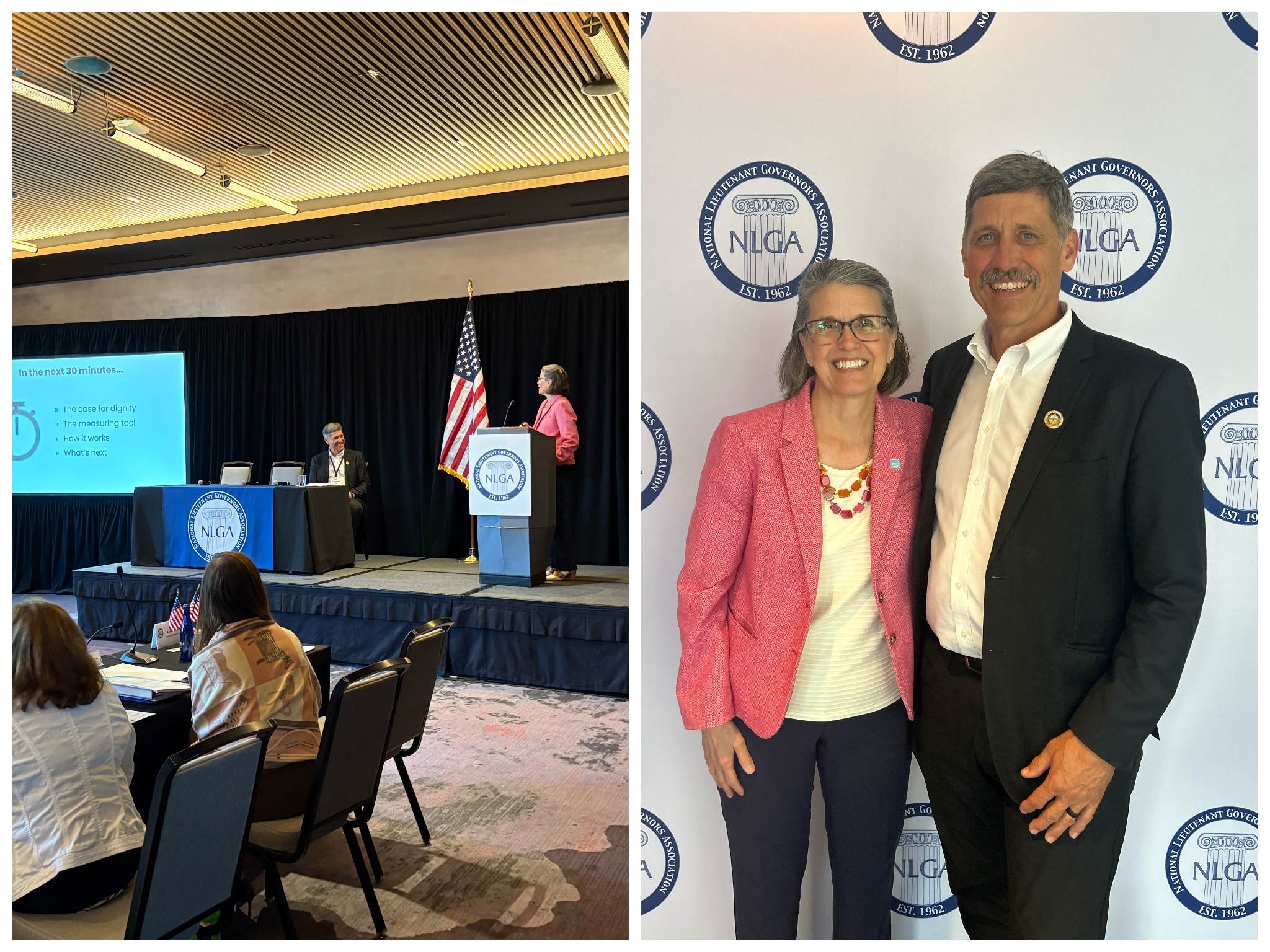
Last week, Tami presented to a group of Lieutenant Governors at the National Lieutenant Governors Association in Colorado. Her session was moderated by Vermont Lt. Governor John Rodgers and attended by Lt. Governors, their staff, and other community partners.
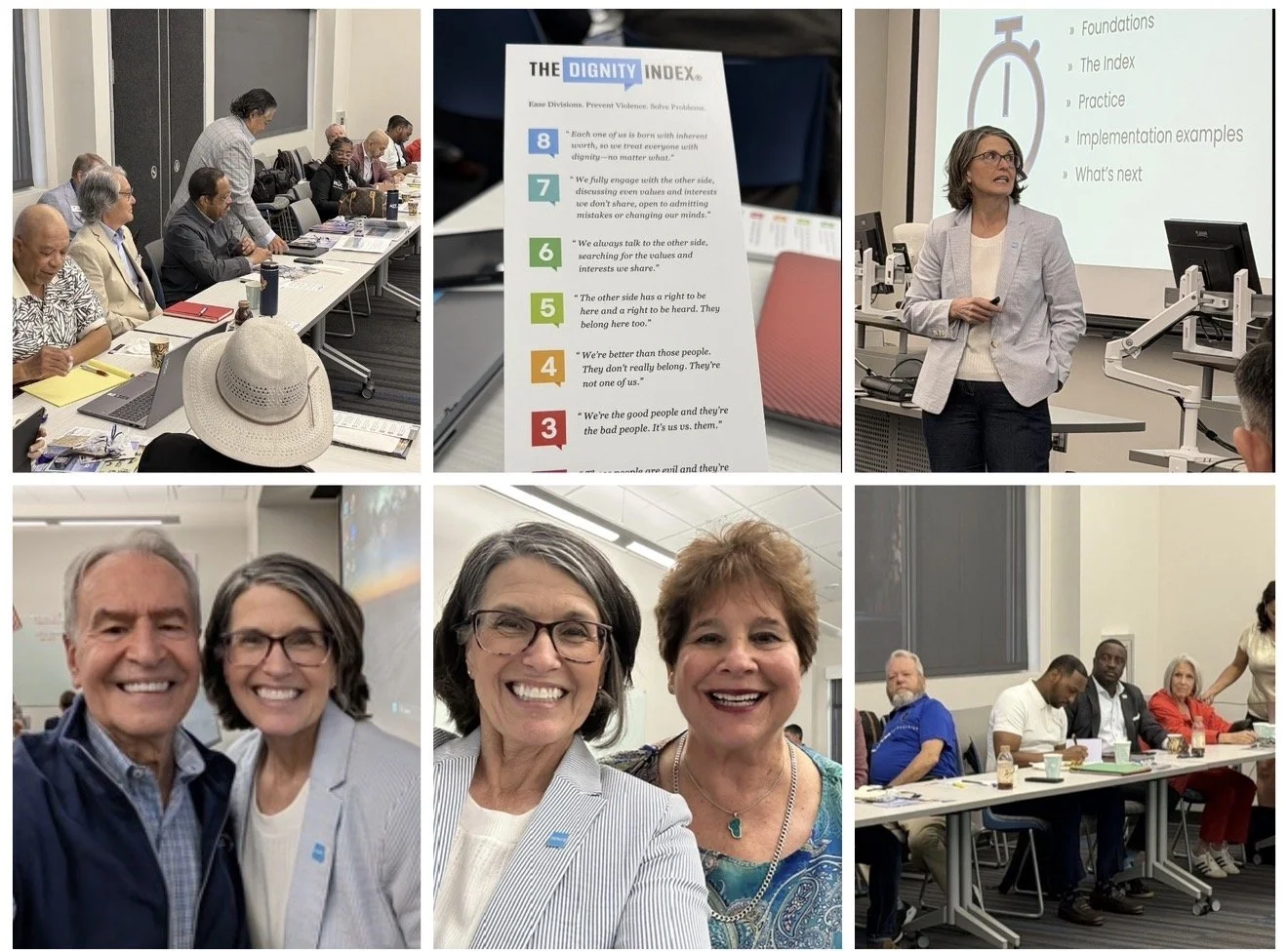
Tami traveled from Denver to Lake Tahoe, where she presented a workshop to the Board of Directors of the National Association of Community College Trustees. These trustees serve on college boards across the country. The Chair of this group was a woman who Tami first met 3 years ago, at an early presentation on the Dignity Index in Reno! It was great to reconnect!
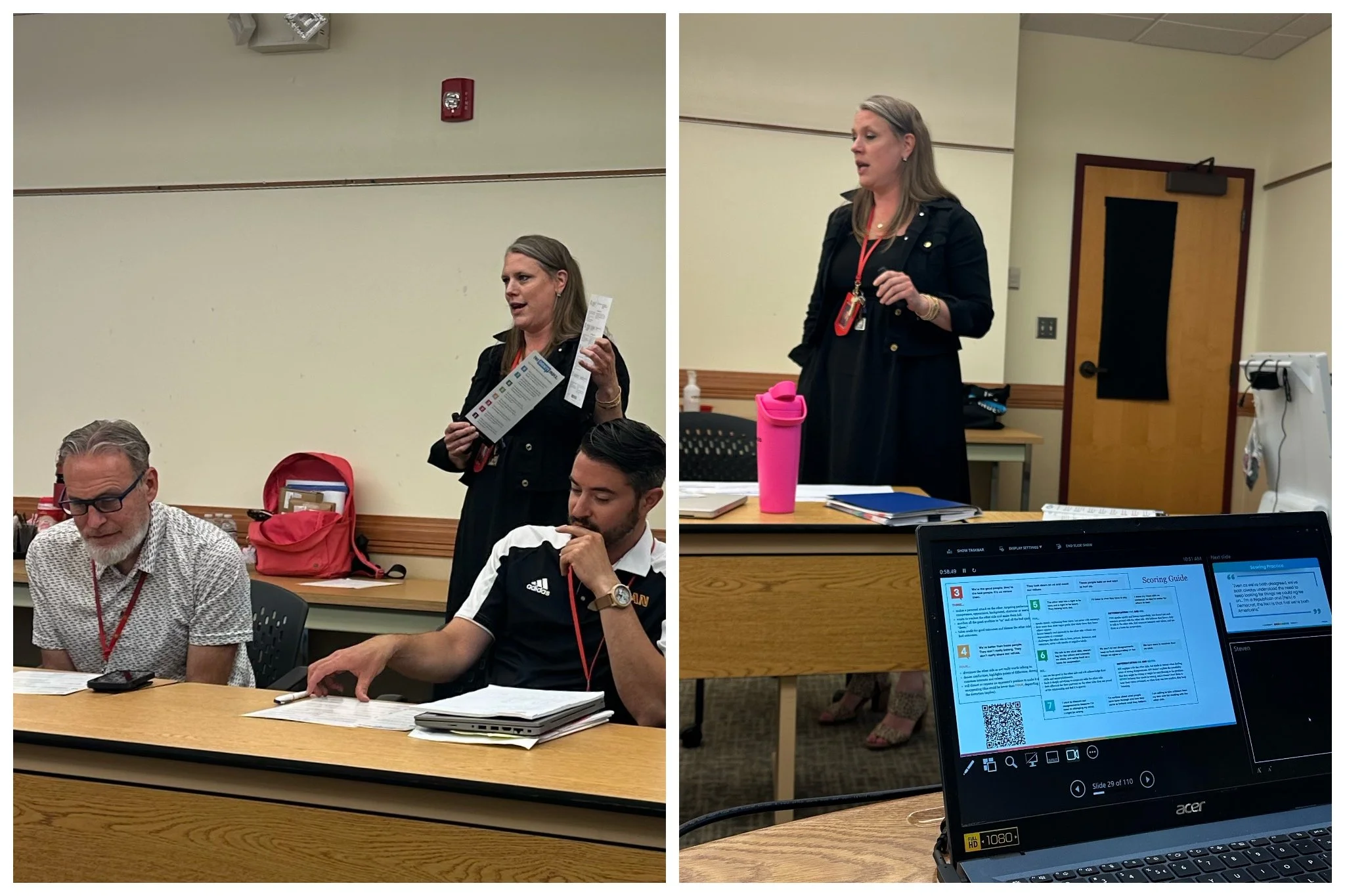
Last week, our team had the opportunity to bring the Dignity Index to school leaders in the Olean School District in New York alongside one of our newest Certified District Trainer graduates, Lauren. The Olean leadership team invited us to help establish a common language for dignity and learn how to strengthen the relationships and culture that support effective leadership across the district.
Watching Lauren confidently step into a co-facilitator role was a wonderful reminder of what the CDT program is all about: equipping local leaders to bring the Dignity Index to their own schools and communities. Each new Certified District Trainer expands the number of people equipped to lead dignity-centered conversations, helping this work spread one community at a time.
Congratulations, Lauren, on this exciting milestone!
Interested in becoming a Certified District Trainer? Join us at an upcoming training in Oklahoma on October 14th and 15th or Utah on October 22nd and 23rd. Click here to learn more
EASE DIVISIONS. PREVENT VIOLENCE. SOLVE PROBLEMS.
