Last week, I got the flu. Influenza A, to be exact. I’m one of those people who has been extraordinarily lucky with my health over the years and have rarely been sick. Lucky me. But this time, I got the full flu. Bed for days. Sweats. Aches. Hacking cough. Throbbing head. The full works.
During the week, it felt like the flu was robbing me of my dignity, but it turns out, it was just the opposite.
Let me explain.
I sometimes confuse dignity with strength. I love having the strength to work hard for the causes I believe to be important. I love championing the athletes of Special Olympics and championing the dignity movement that they’ve inspired. I love riding my bike around town and participating in events and gatherings of inspiring people and friends. I love everything that having energy and health make it possible for me to do.
But when I confuse energy and health for dignity, I make a big mistake.
Being sick gave me a chance to listen for the message of how dignity is often revealed in illness, not distorted by it. My daughter Kathleen, for instance, reminded me that being bedridden was a “real experience of consent, Dad. You’re really practicing what it feels like to have to let go of your will.” I was taken aback by her comment, not because it didn’t make sense but because it felt so surprising. I had simply felt sick: she saw me feeling like I was relinquishing control. Does dignity grow when we relinquish control?
Later that same day, my daughter Rose asked me about what my body was telling me. “It’s telling me it doesn’t have the ability to do anything,” I replied. “Are you listening to that?” she asked. “Of course not” was my initial reply. But then I realized I actually had no choice but to “listen to my body.” I would prefer to overrule my body than listen to it, but maybe listening to the capacity and limits of one’s body can deepen one’s sense of dignity? I had never thought of it that way.
Finally, as the week wore on, I tried to get up to help my wife Linda clean up our house that had been turned upside down by Thanksgiving and parties and dozens of family. I put on clothes and haltingly walked downstairs to move furniture and organize the kitchen and more. By the time I got to the first task, she looked at me like I was crazy. “You don’t have the energy, do you?” she said. “I, uh, well, kind of, I’m trying to…” “Go to bed, Timmy. You’re sick. I’ve got this.”
I looked at her and couldn’t believe that I couldn’t even help a little. I was embarrassed. Incredulous. But I could barely stand up, so I stumbled back upstairs and back to bed. I so wanted to be able to carry my weight. Instead, I had to realize she was carrying me, and I needed to be carried.
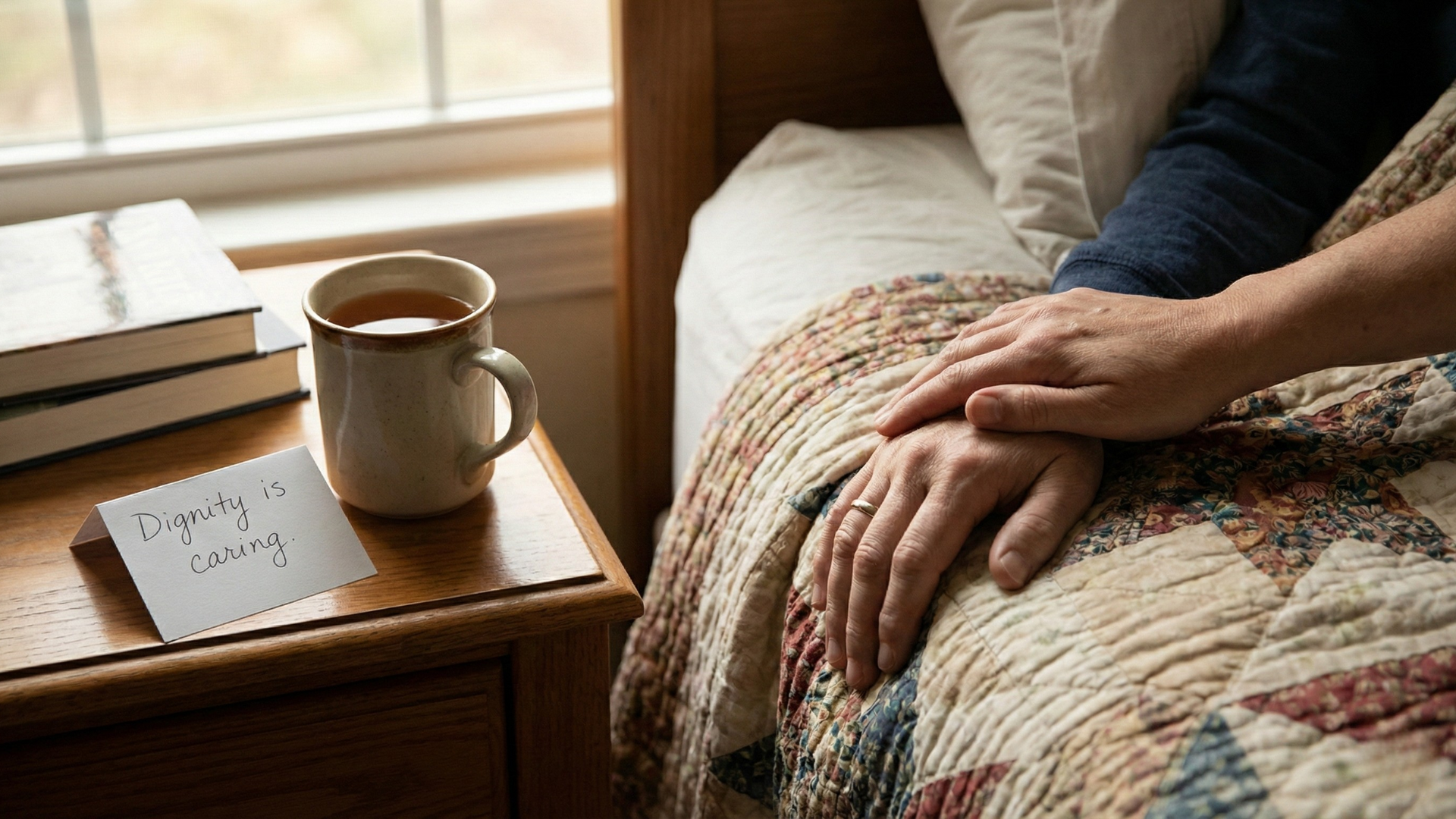
Humiliating? In some ways. But as I crawled back to bed, I was almost in tears with how much Linda was caring for me, how much my children were guiding me, how I could do almost nothing, how everyone around me was picking up from my weakness. And slowly, a version of my dignity emerged, not predicated on my abilities but on my capacity for gratitude for the gifts of others.
What does all this have to do with our dignity movement? A lot. At least to me.
Dignity is a lot about humility. Realizing that we don’t have the means to solve problems ourselves is humbling, but a reminder that treating others with dignity should never be arrogant. We can all learn from each other.
Dignity is a lot about relationships. We have each been given dignity at birth, but we need each other to protect our dignity. In my days of need, I needed others. No one protects their dignity alone. We need each other.
Finally, dignity shines through when we care for one another. We don’t need a politician or a scholar to show us how to care. We just need people who care, and people who care are ambassadors of dignity. It may seem small to care for another person who happens to be a little sick, but it meant the world to me. And that care preserved and even strengthened my dignity in a moment of need. Dignity means caring.
Last week, the news was often horrible. Violent attacks in the Caribbean replayed for the world. Persistent violence in the Middle East. Brutality in Ukraine. And more name-calling at home. A friend told me his son said to him, “Dad, look at what hatred and contempt are doing. They’re winning.”
In some ways, of course, that’s true. But you have to choose what side you’re on. Contempt might win power for a time, but at the times that matter, it's humility and listening and caring that carry the day.
I don’t wish illness on anyone—even a minor illness like mine. But I do wish for everyone the lessons my illness taught me.
Tim